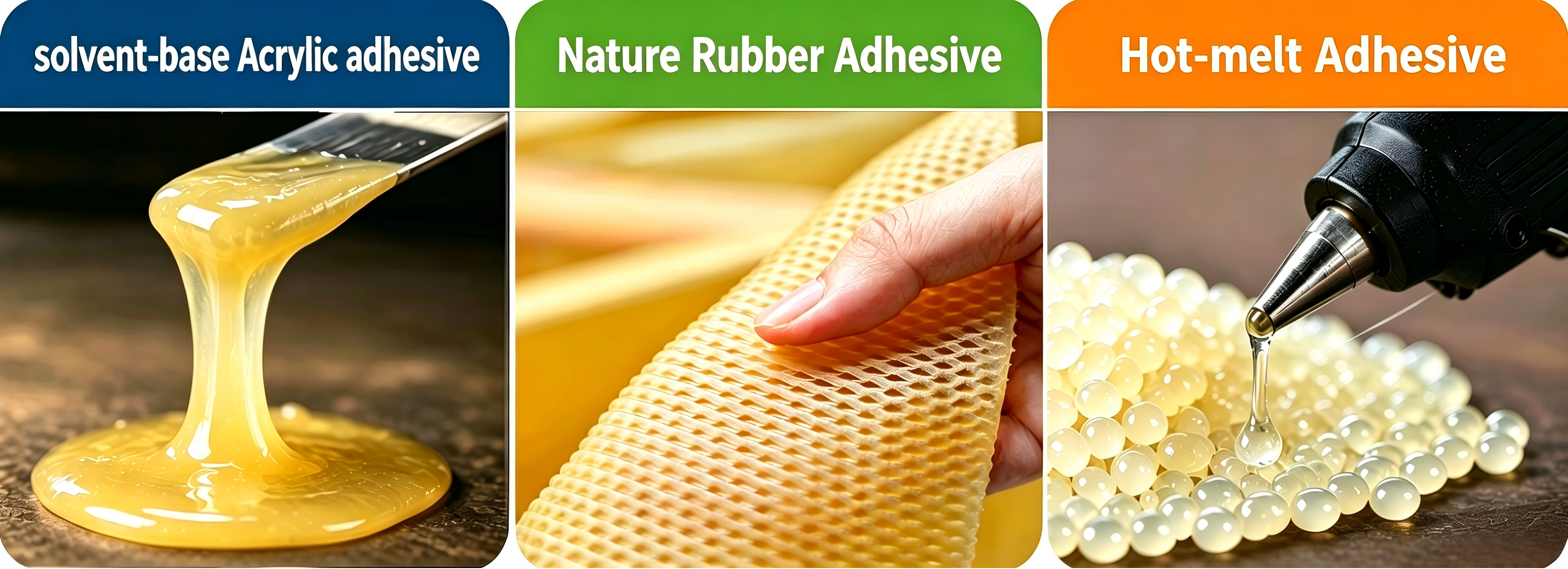
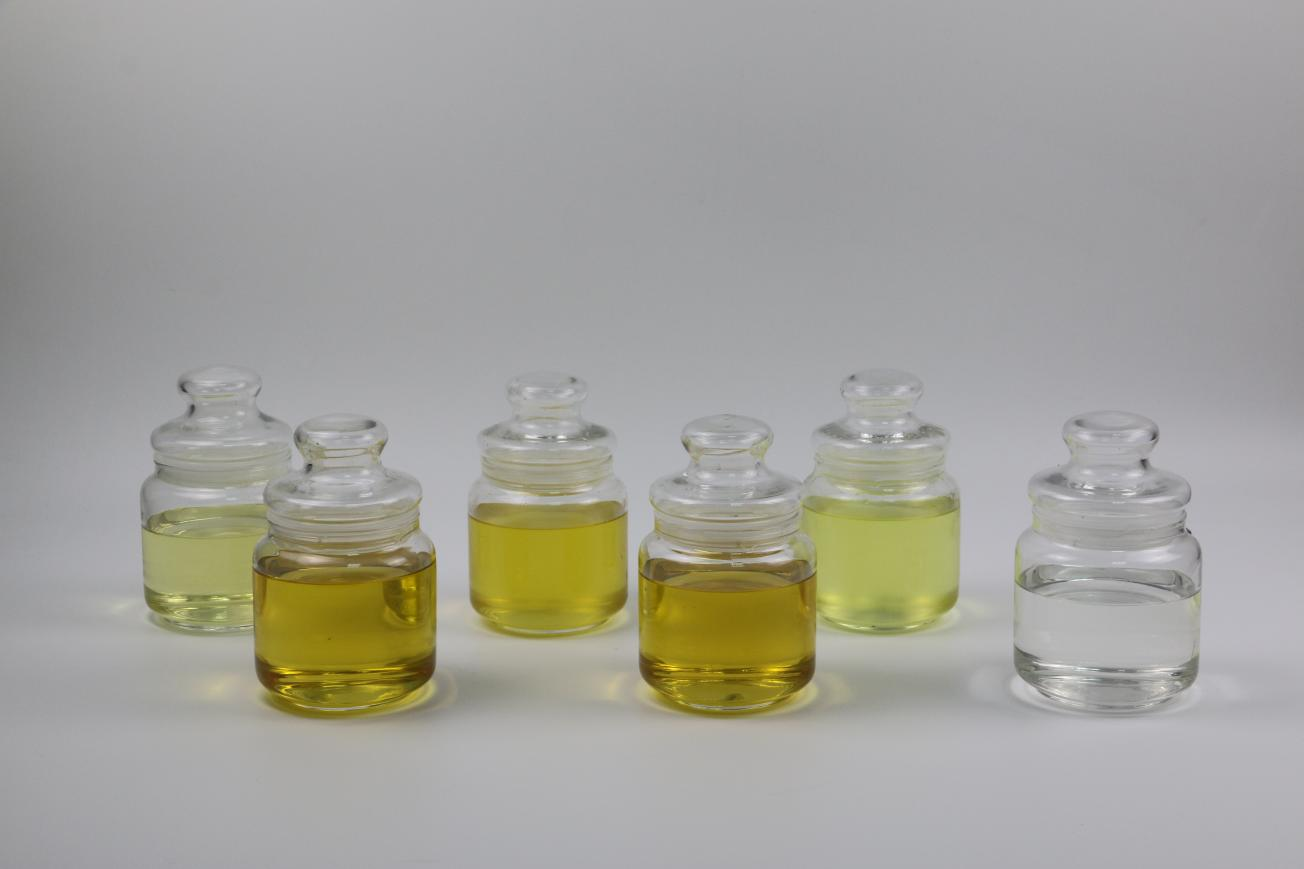
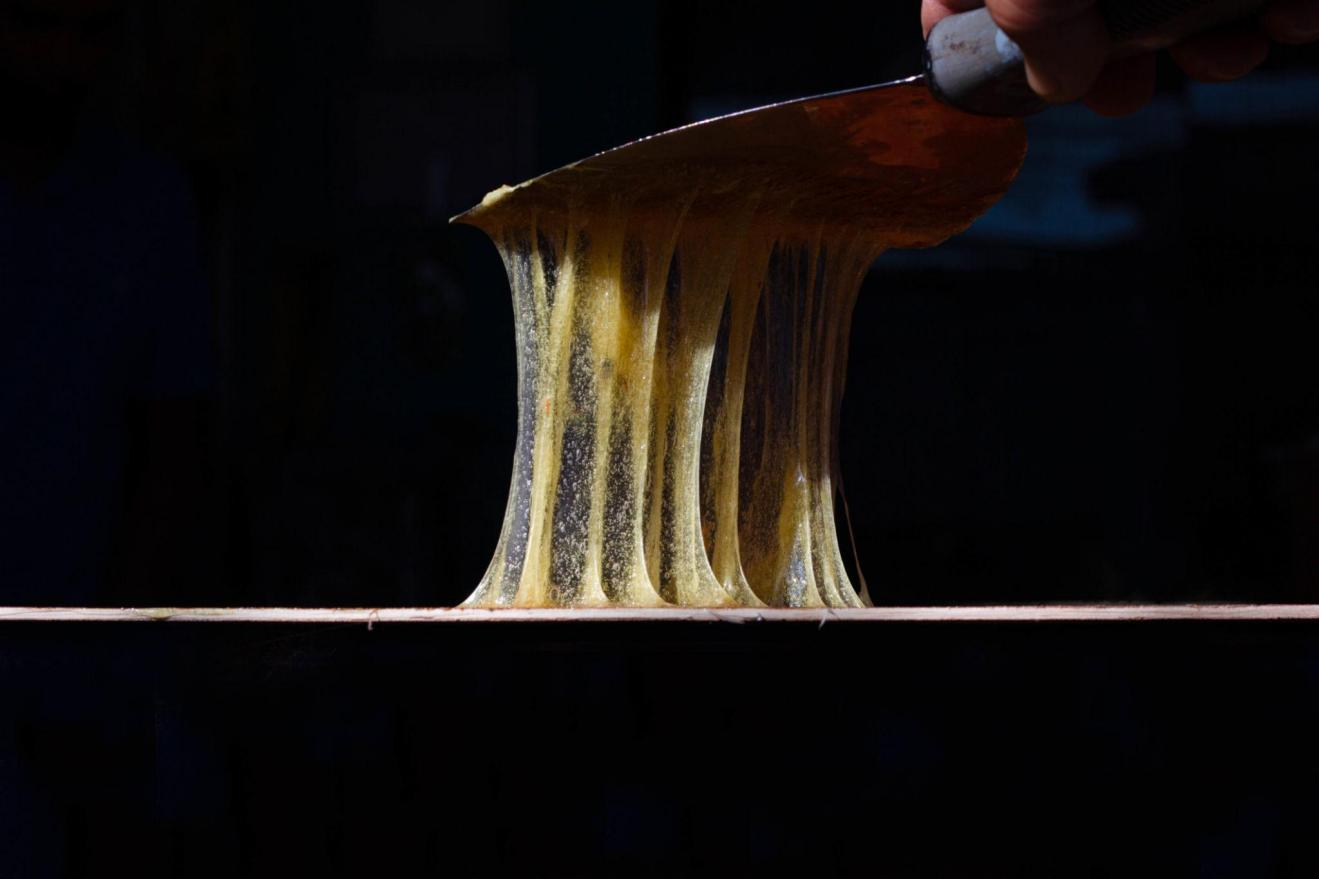
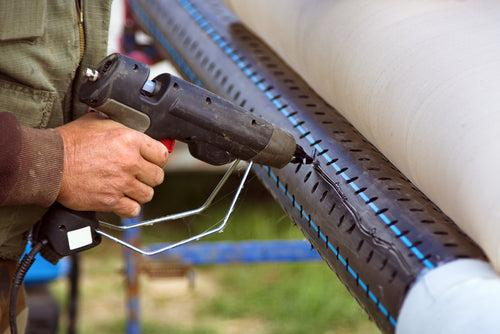
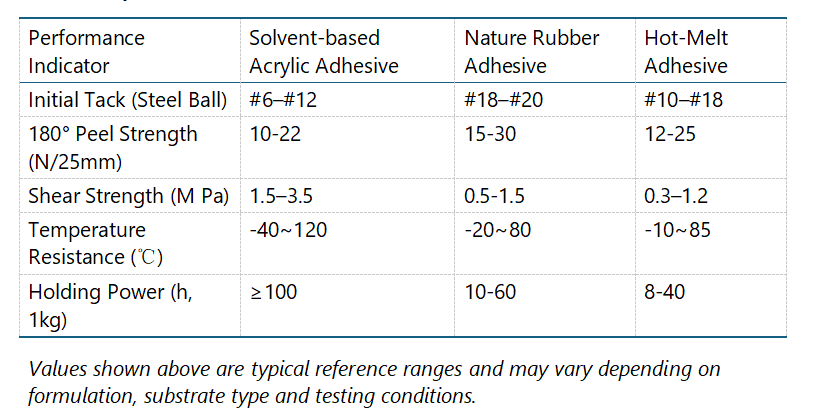
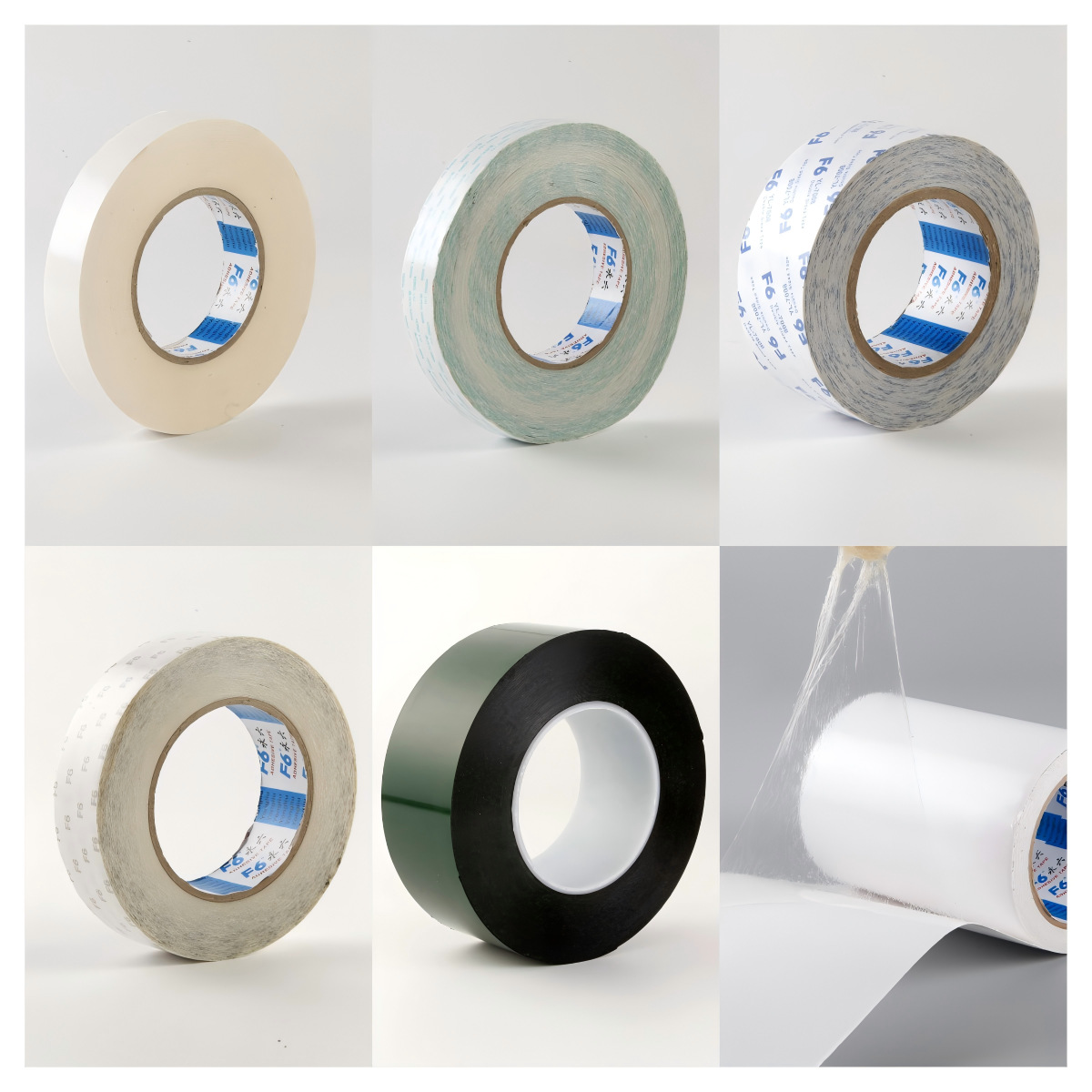
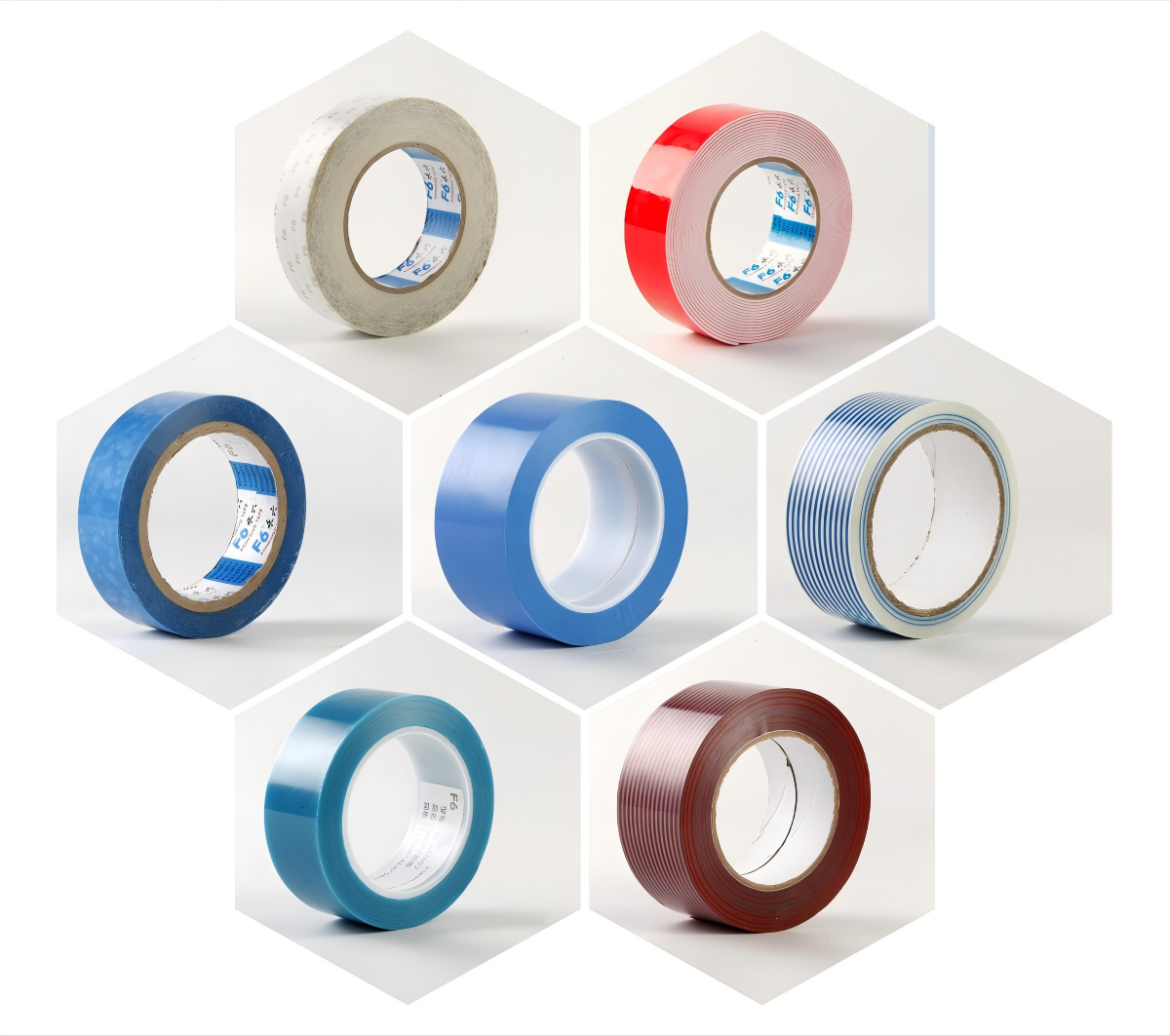
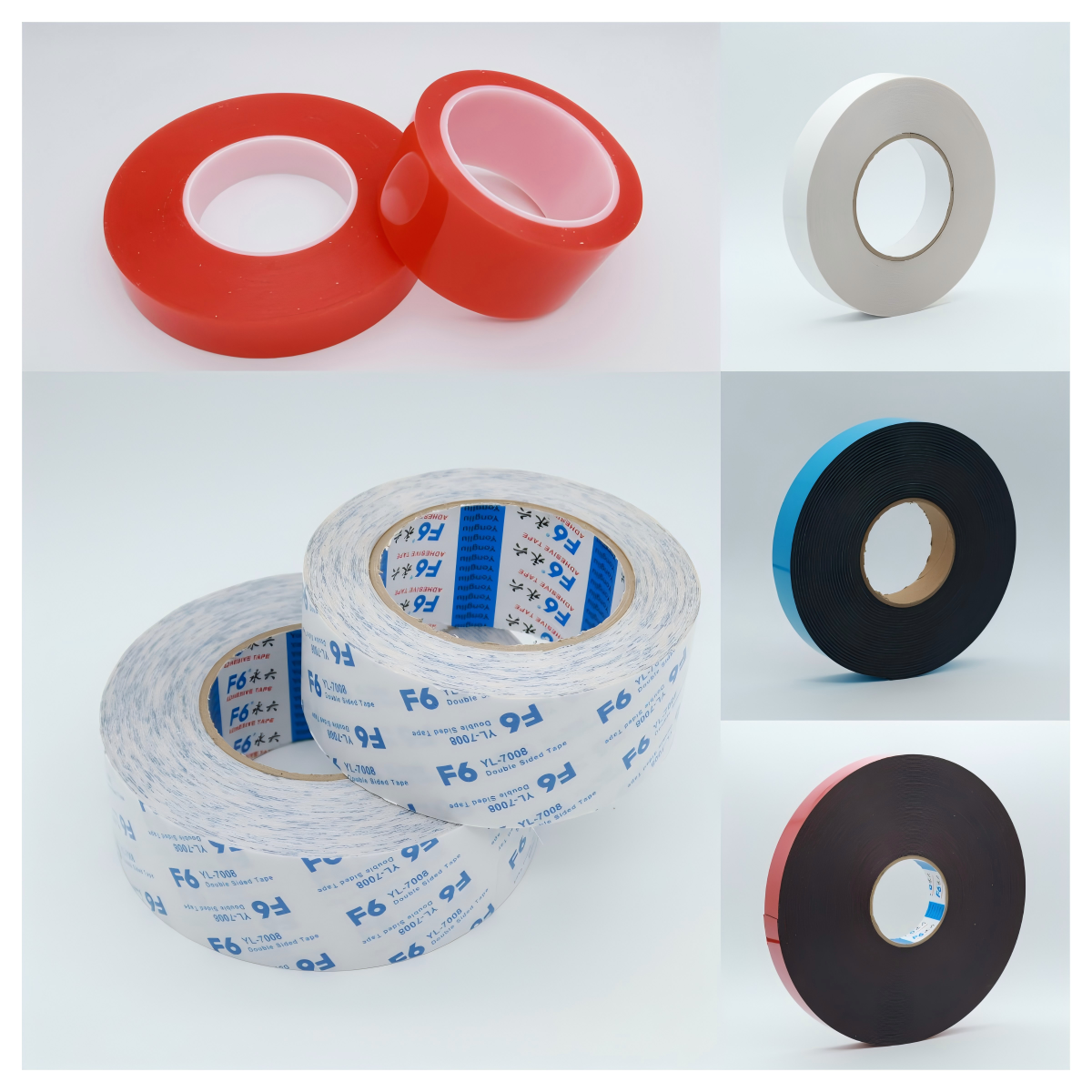
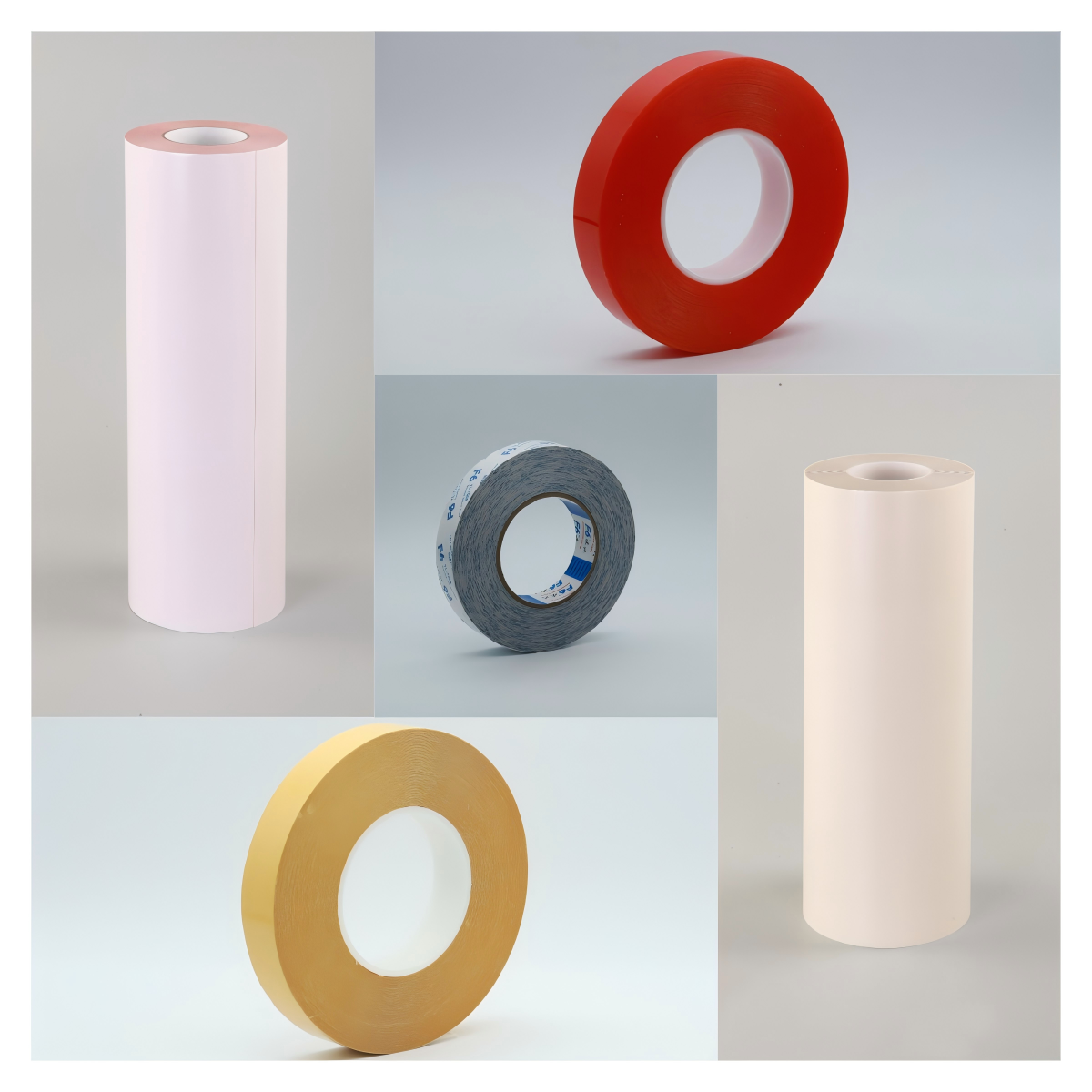
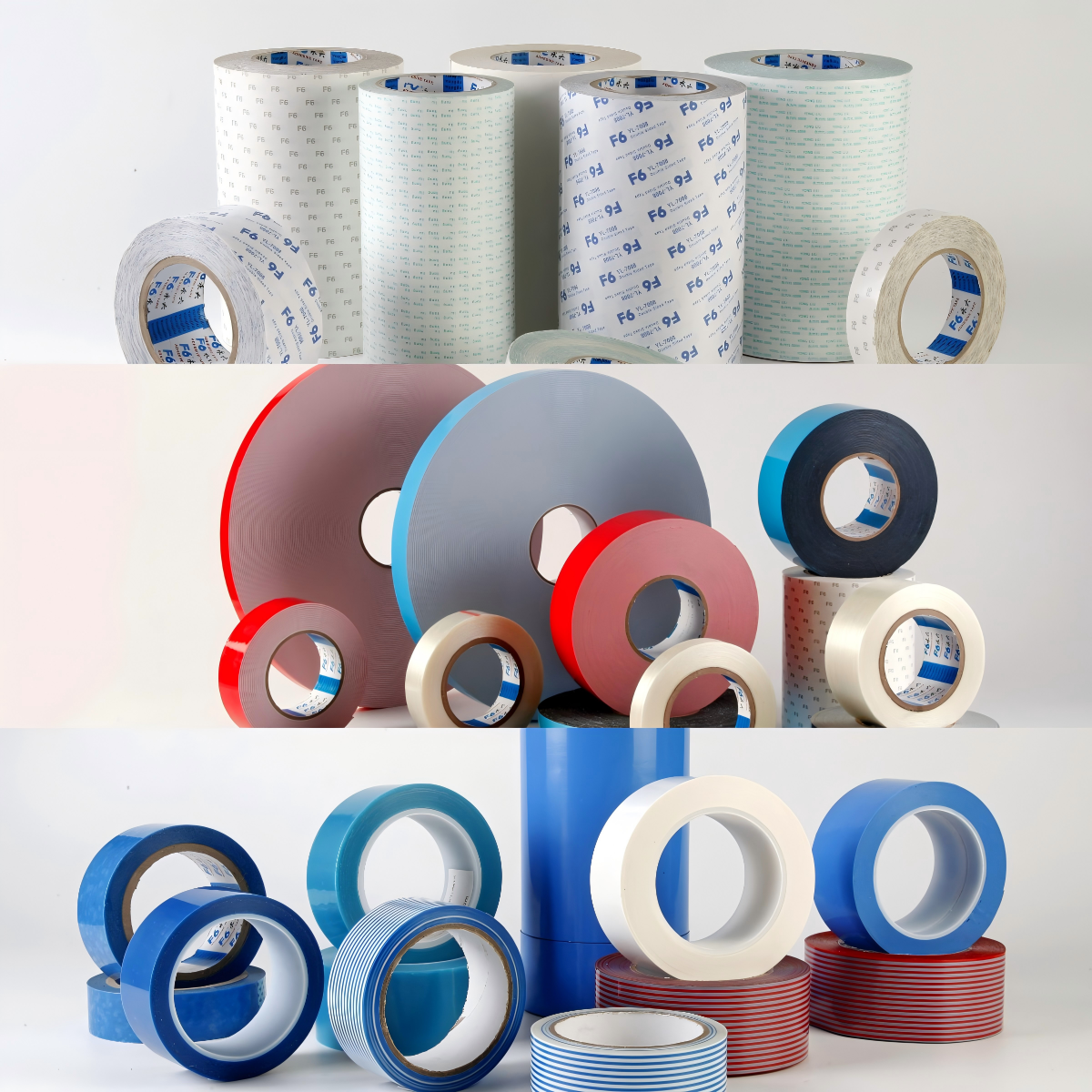
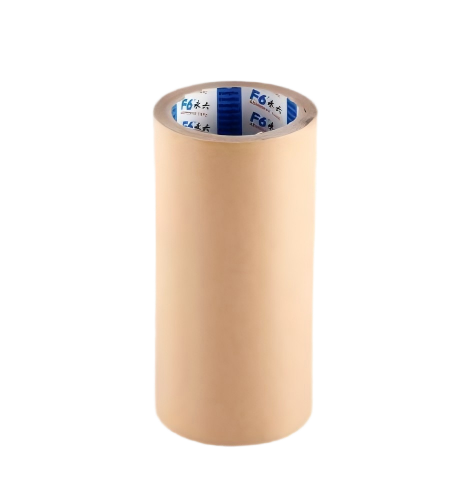
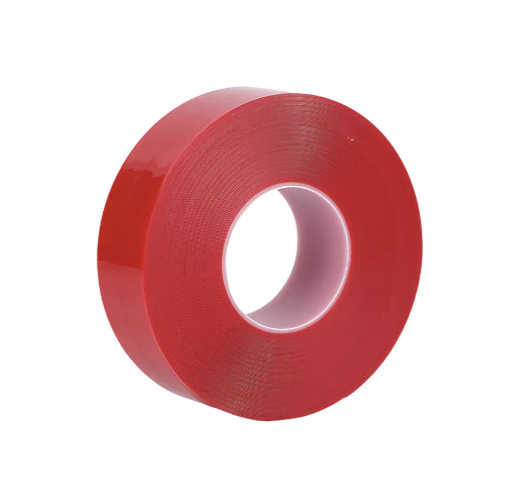
Solvent-based Acrylic, Nature rubber and hot-melt adhesives are widely used across industrial bonding applications. A common misconception in industrial bonding is that adhesive systems can be ranked simply by “strength” to determine a universal best option.
In reality, no single adhesive fits every application. Material selection should be based on substrate type, load condition, operating temperature, environmental exposure and production process.
Fundamentally, successful adhesive selection is about matching material properties to actual application requirements.
1. Solvent-based Acrylic Adhesives
Solvent-based acrylic adhesives are designed for long-term durability, heat resistance, and environmental stability rather than extremely high initial tack. They provide excellent UV resistance, strong holding power, and reliable long-term adhesion performance, making them well suited for demanding and long-life applications such as automotive trim bonding, appliance assembly, outdoor mounting, and permanent foam lamination.
2. Nature Rubber Adhesives
Natural rubber adhesives have strong initial tack and excellent peel strength on both polar and non-polar surfaces. They bond quickly even with short contact time, and provide good flexibility and easy, clean removal without residue, making them suitable for temporary fixing and indoor applications. However, they have limited heat resistance (usually above 70°C), and relatively weak resistance to aging, UV, humidity, and chemicals compared with acrylic systems, resulting in lower long-term stability.
3. Hot-Melt Adhesives
Hot-melt adhesives are used for high-speed production, providing fast bonding through a melt-and-cooling process with immediate handling strength. Some systems are also referred to as synthetic rubber-type hot melts due to their rubber-like elasticity and cost efficiency. They offer high initial tack and good peel adhesion on a wide range of substrates and are widely used in packaging, labeling, hygiene products, and light-duty assembly.
Compared with acrylic systems, they provide faster processing and lower cost, but lower heat and aging resistance, weaker environmental resistance, and may leave residue after removal.
4. Performance Comparison
5. Final Thoughts
Acrylic, rubber and hot-melt adhesives should not be viewed as competing materials, but as complementary solutions designed for different industrial challenges.
Solvent-based Acrylic adhesives provide long-term durability and environmental stability
Nature Rubber adhesives deliver aggressive tack and excellent surface adaptability
Hot-melt adhesives maximize manufacturing efficiency and processing speed
Most bonding failures are not caused by poor adhesive quality, but by selecting an adhesive system that does not match the actual working conditions.
In industrial bonding, selecting the right adhesive is often more important than selecting the strongest adhesive.
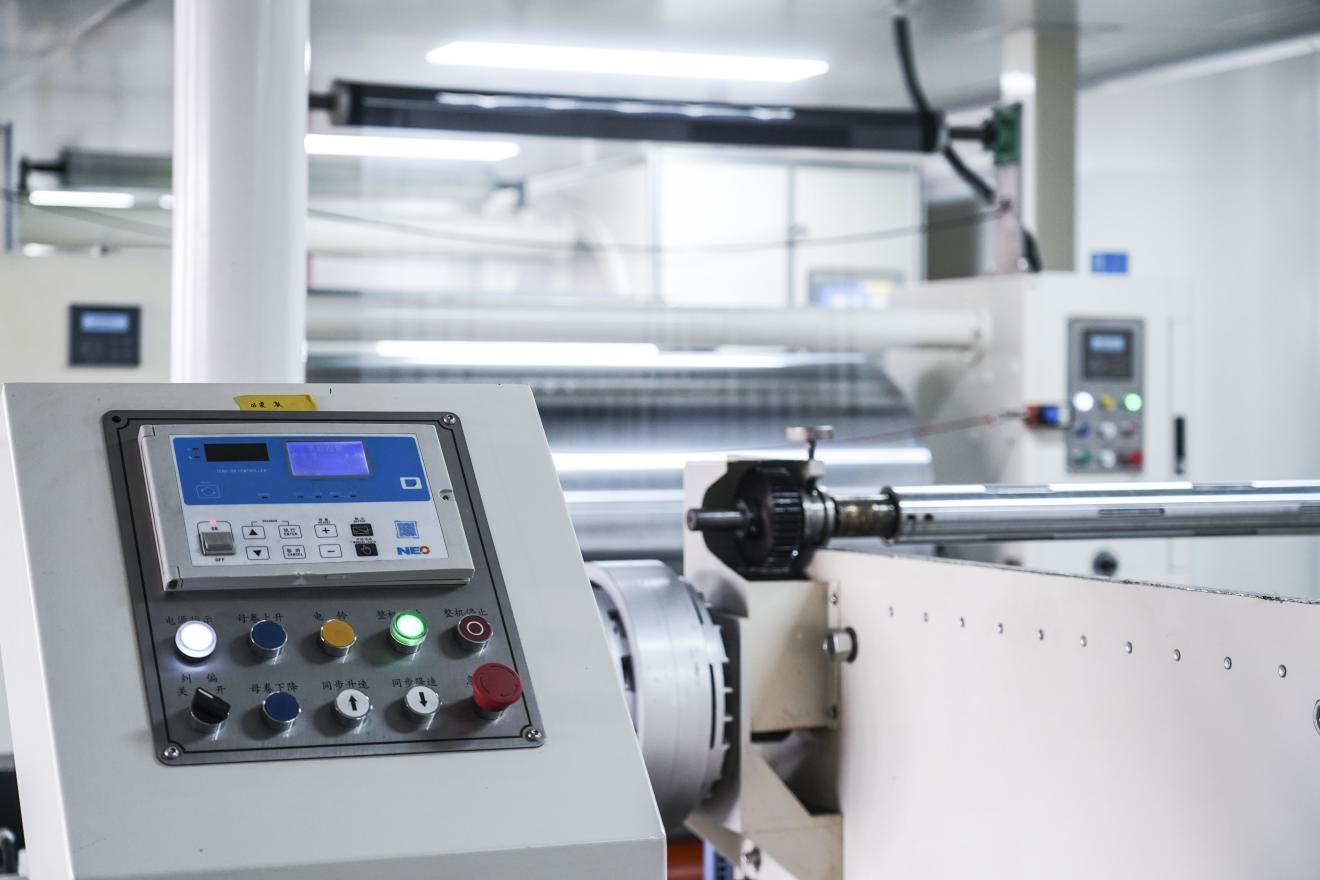
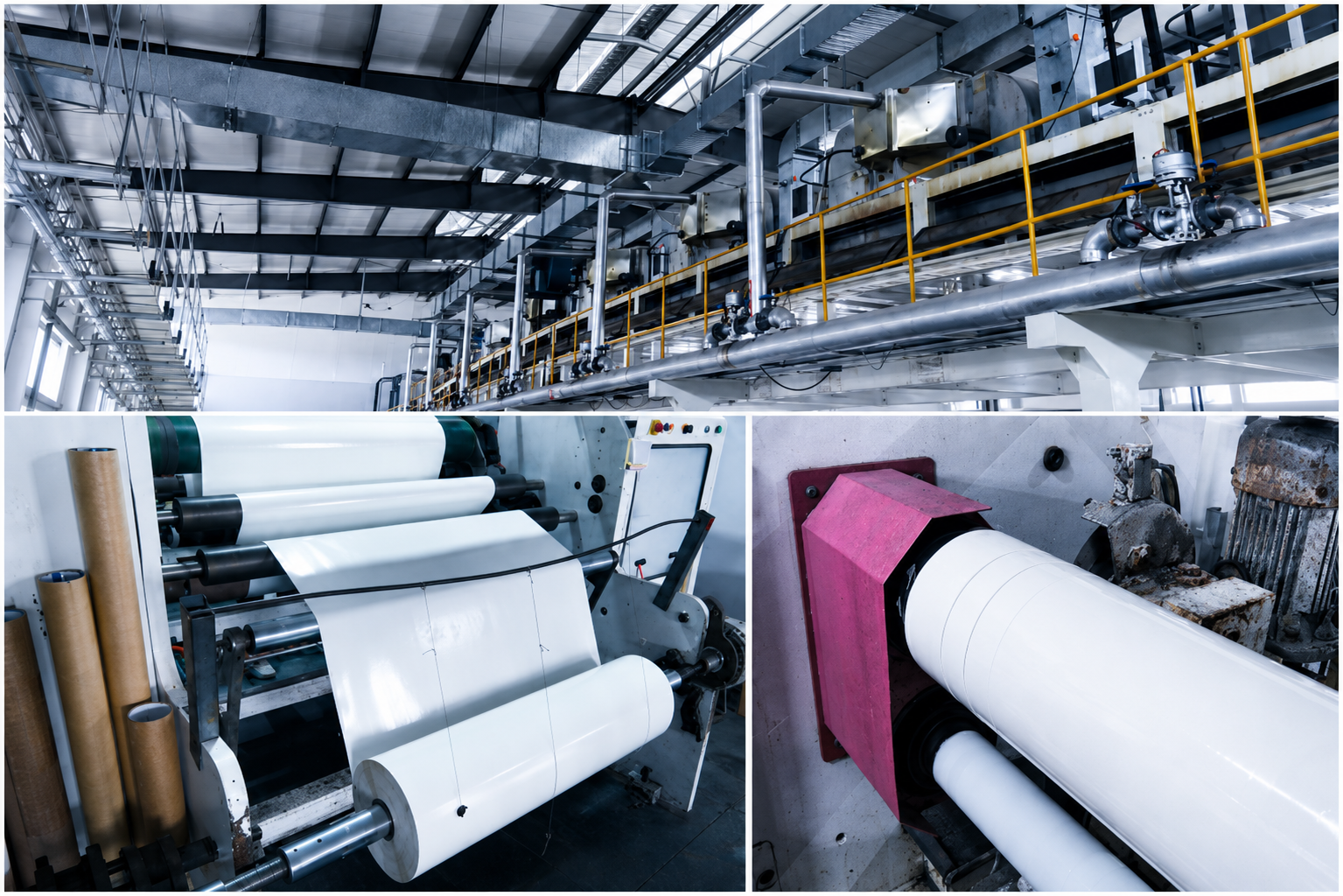
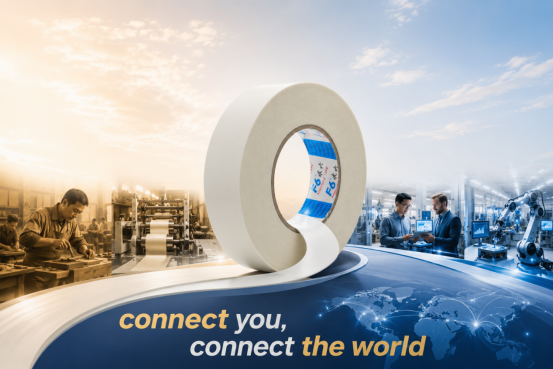
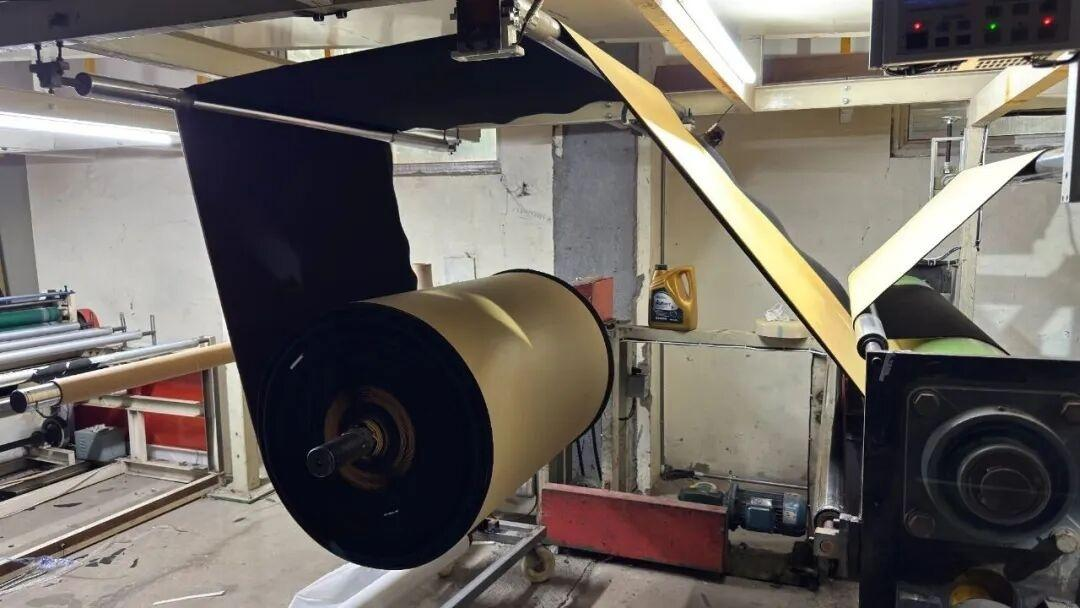
Though a slim roll of industrial tape looks unremarkable in modern industry, it serves as an indispensable foundation and a true reflection of Chinese manufacturing craftsmanship. Rooted in this sector, local manufacturers have long pursued excellence and stayed committed to long-term development.From normal regular packaging tapes to high-performance industrial variants featuring insulation, heat resistance and waterproofing, our teams stay focused on R&D, steering clear of cut corners. We devote ourselves to material formulation, process improvement and quality management, ensuring every roll delivers the reliability and durability typical of Made in China.Superior quality comes from standardized, refined production. Our core procedures — coating, laminating, rewinding and slitting — operate seamlessly. High-precision equipment spreads custom adhesive evenly onto substrates for stable viscosity and thickness. After drying, laminating, rewinding and precision cutting, rigorous in-process checks eliminate defects, delivering consistently dependable products.
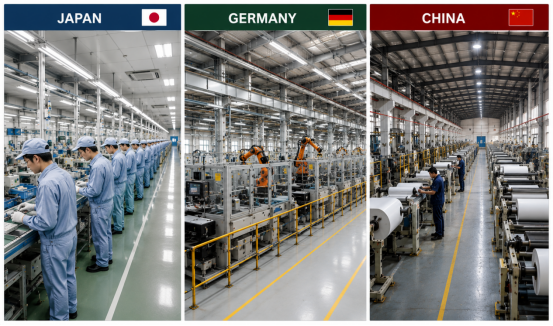
The advancement of manufacturing relies not only on process improvement, but also on the upgrading of management systems and working modes. As benchmarks of high-end manufacturing, Germany and Japan have established mature, people-oriented and highly efficient factory operation systems. Japanese factories adopt scientific working schedules. Besides regular lunch breaks, short rest periods are arranged every afternoon to help workers relax and refresh, avoiding reduced efficiency and operational errors caused by prolonged intensive work, thus securing production accuracy through a balanced work-rest rhythm. German factories strictly comply with working hour regulations and draw a clear line between working time and rest time. Supported by sound labor laws and corporate management rules, unnecessary overtime is eliminated, and full efforts are concentrated on boosting productivity and process standards during working hours. For domestic adhesive tape manufacturers, the development journey is also a process of management reform. In the past, most domestic factories relied on limited lunch breaks, day-and-night shift work and long working hours to boost output, pursuing production speed at the cost of labor. Today, the industry has bid farewell to extensive production modes. Learning from advanced international concepts, manufacturers have optimized work schedules, standardized production workflows and improved management systems. By balancing employee welfare and product quality, the industry has achieved a transformation from relying on manpower to emphasizing refined management and meticulous production.
For a long time, “China Speed” has been a hallmark of Made in China. Boasting high productivity, prompt delivery and large-scale production, China’s adhesive tape industry has secured an important position in the global market, demonstrating the strong vitality of domestic manufacturing. Nevertheless, the industry clearly recognizes that speed never equals quality, and only superior quality can support long-term development. In recent years, domestic industrial tape manufacturers have actively learned from the strengths of German and Japanese manufacturing and shifted focus from sheer speed to premium quality. They draw on Germany’s rigorous process standards and sophisticated quality control systems, as well as Japan’s dedication to craftsmanship and standardized operating procedures. Moving away from extensive mass production, manufacturers prioritize material upgrading, process refinement and meticulous polishing. Strict inspections are implemented throughout the whole chain, from raw material selection and in-process monitoring to multi-stage finished product testing. Fine craftsmanship has replaced crude mass production, enabling Chinese adhesive tapes to excel not only in output and efficiency, but also in precision and quality.
A roll of industrial tape tells the story of China’s manufacturing upgrade. The domestic tape industry has evolved greatly: we carry forward fine craftsmanship, upgrade production technologies, learn from global expertise, and shift focus from output volume to product quality. Upholding craftsmanship and quality, we integrate international advantages while sticking to our original aspirations. We will keep refining products with dedication, pursue steady progress and superior quality, and help Chinese industrial tapes win global trust with reliable performance.
Before I formally entered the industrial tape sector, my understanding of “tape” was limited to the most basic, everyday usage. Back then, when I said “tape”, I was thinking of simple “normal tape”—the kind we commonly use to seal boxes, bundle items, or stick paper. I never imagined that this seemingly unremarkable “small item” actually hides a complex, professional system, nor did I realize that it could play a critical, irreplaceable role in industrial production.It wasn’t until I stepped into the industrial tape industry that I discovered it is now an indispensable auxiliary material in manufacturing processes. Choosing the right industrial tape is a matter of precision — every parameter matters, and each directly affects its application and performance.
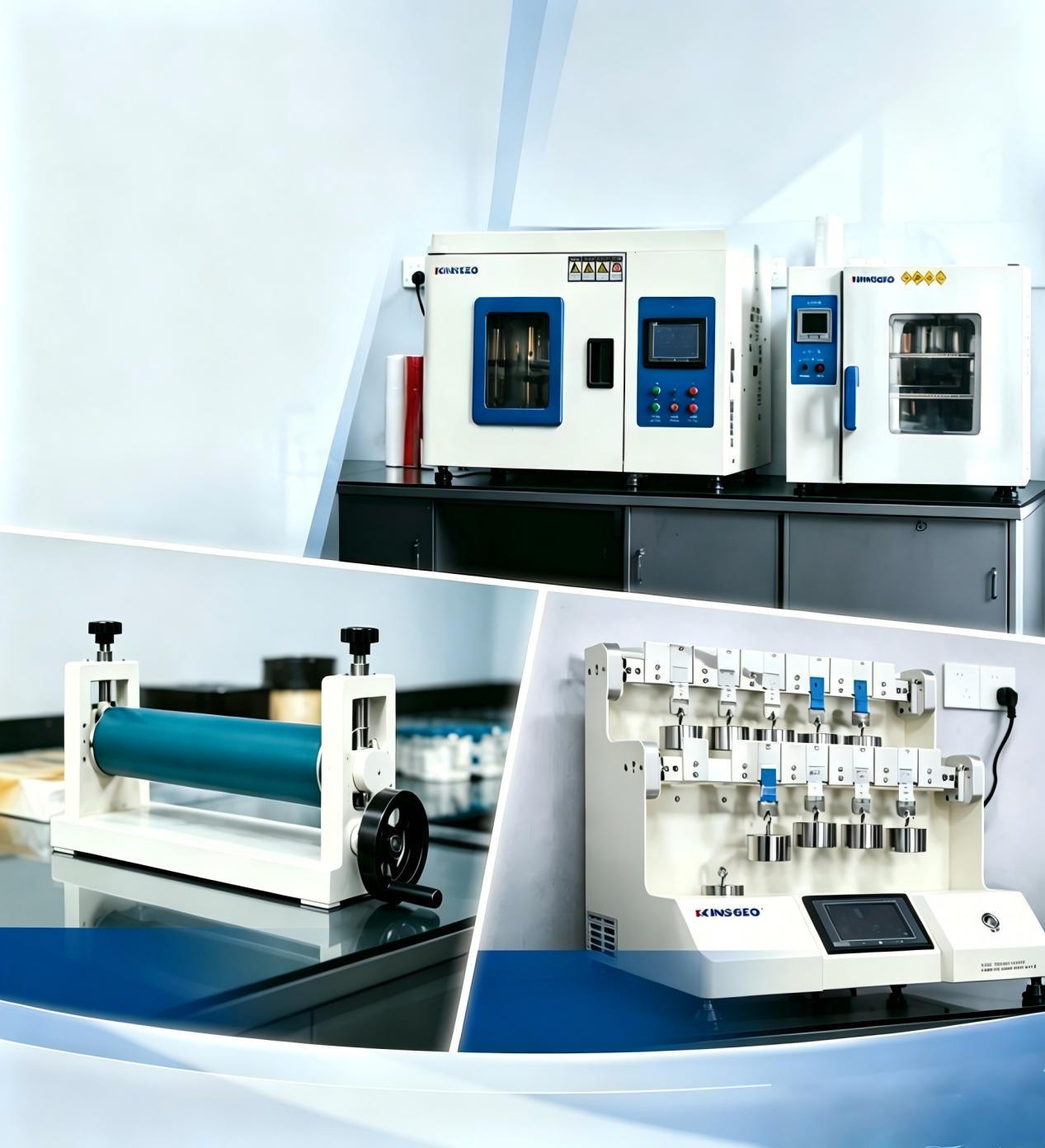
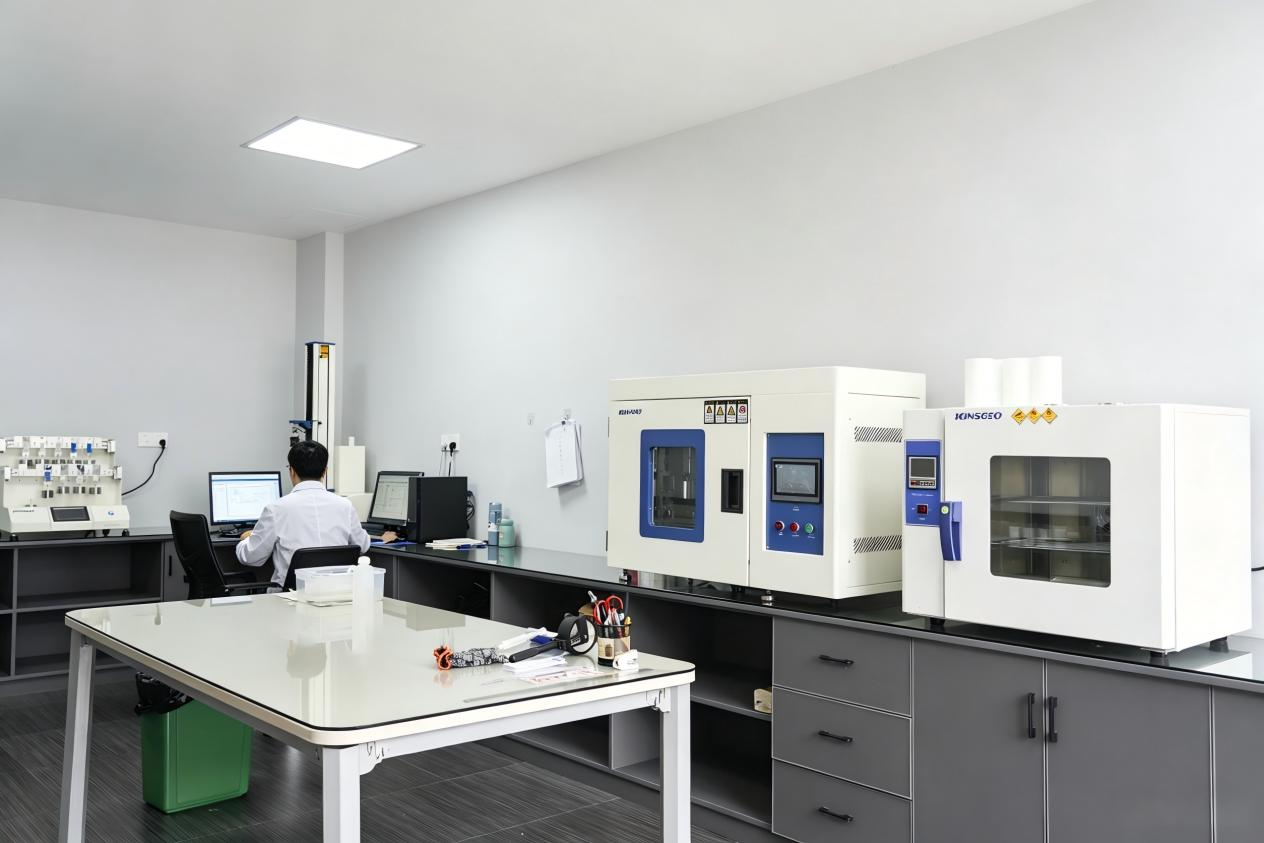
I began diving deep into the technical aspects of industrial tapes, starting from the fundamentals. I learned that tape thickness is not arbitrary: thinner constructions suit precision components, while thicker versions handle heavier loads and rough surfaces. The adhesive itself is the core of the tape—different chemistries (solvent, emulsion, acrylic, silicone, rubber) determine tackiness, durability, and compatibility with various substrates. Some formulations excel at elevated temperatures, others maintain performance at low temperatures, and a few are even engineered to bond reliably to oily or uneven surfaces. Other critical specifications define a tape’s real-world performance. Temperature resistance dictates whether the bonded assembly can withstand extreme industrial conditions without failure. 180° peel adhesion measures the tape’s ability to bond and, in some cases, be removed cleanly without leaving residue. Static shear resistance (both at room temperature and under heat) and holding power determine the long-term stability of the bond, especially under static load, vibration, or creep conditions. Additional tests — such as peel adhesion after water immersion, humidity exposure, or heat aging—further validate performance in harsh, real-world environments. I spent a week studying in our factory laboratory, which has profoundly deepened my professional cognition. In the past, I only aimed to finish production schedules, yet now I fully recognize that we shall guarantee stable production output while imposing stringent quality control.It was the first time I came to truly appreciate the rigorous laboratory supervision and quality management requirements set for Chinese manufacturing plants. Our factory has established a full-coverage and well-rounded testing system that covers every inspection link in detail.
During the study period, I also got well-acquainted with formal testing standards for adhesive tapes. Domestically, we strictly follow GB/T national series standards for adhesive tape performance testing; for overseas business, we also refer to mainstream American industrial standards represented by ASTM testing specifications. We align product test indicators with both sets of authoritative standards, so as to ensure our products are qualified to enter both domestic markets and North American markets smoothly.
This learning process has not only equipped me with comprehensive expertise in industrial tapes, but also profoundly reshaped my mindset and working philosophy as a sales practitioner. Having gained valuable practical experience through in-depth study in the factory laboratory, I now aspire to visit production lines and professional testing facilities across different regions around the world in the future, to broaden my horizons and accumulate more on-site industry experience. Meanwhile, I have also come to fully understand the core competencies and professional qualities that a qualified industrial tape salesperson ought to possess.I no longer focus solely on price-oriented sales thinking. I clearly realize that improper selection of adhesive tapes will directly impact clients’ production efficiency, finished product quality and even on-site operational safety. Therefore, matching customers with the most suitable tape products is not merely a sense of responsibility, but also the most valuable service I can deliver. Step by step, I have grown from a complete industry newcomer into a professional practitioner who has in-depth knowledge of products, accurate insight into customer demands and clear cognition of market trends. I have learned to handle various work challenges with flexible and comprehensive thinking, and fully respect the personalized needs of every partner. In the days ahead, I will keep enriching my professional knowledge, stick to this earnest working attitude, and strive to assist every client in finding the most appropriate industrial tape solutions. I will also keep exploring and learning continuously, embracing the diverse development trends of the industry and making steady progress all the way.
Flexographic printing demands the highest levels of precision, stability, and efficiency. Achieving top-quality results relies not only on advanced plates and inks but also on the right adhesive tape. Flexo Plate mounting tape securely bonds printing plates to cylinders or sleeves while providing uniform, elastic cushioning. As a critical component for precise registration, consistent ink transfer, and extended plate life, this tape effectively reduces printing defects and supports stable, high-speed production across applications such as label converting, flexible packaging, and corrugated printing.
Three-Layer Structure
Compressible Foam Core: Available in soft, medium, and firm densities, the foam absorbs printing pressure, compensates for mechanical micro-tolerances, and delivers consistent cushioning for fine dots, delicate texts, and solid ink coverage.
Stabilized Film Base: Minimizes lateral stretching and structural deformation during plate mounting and high-volume printing, ensuring precise thickness uniformity and consistent multi-color registration.
Dual-Sided Precision Adhesive Layer: Balances initial tack with durable holding power. Firmly anchors printing plates to prevent edge warping or lifting while enabling clean, residue-free demounting for maximum plate reuse.
Key Performance Benefits
Stable Registration & Even Ink Transfer Tight thickness tolerance ensures uniform pressure distribution during high-speed operation, eliminating color inconsistency, dot blurring, and registration deviations for high-fidelity prints and fine patterns.
Bubble-Free & Anti-Lifting Performance Air-release properties allow bubble-free lamination and prevent interstitial air gaps. Reinforced edge adhesion resists rotary friction and tensile stress, reducing downtime and defects caused by plate floating or degumming.
Superior Durability for Long Runs Fatigue-resistant foam retains consistent elasticity under cyclic pressure, withstanding frequent machine cycling and long production runs while protecting printing plates during demounting.
Wide Application Compatibility A range of specifications meets diverse printing needs: thin high-density tapes for ultra-fine graphics, medium tapes for mixed-mode printing, and thick flexible tapes for uneven substrates like corrugated boards.
Why Professional Flexo Mounting Tapes Matter
Flexo plate mounting tapes are rarely disposable. They are reused daily, proving that high-performance tapes are in constant demand. For printers, converters, and packaging manufacturers, real value lies in:
·Stable cushioning over long print runs
·Precise plate mounting
·Clean removal without residue
·Consistent ink transfer and print quality
·Reduced downtime during plate changes
·Improved production efficiency and lower hidden costs
Low-cost tapes may save a few dollars upfront, but inconsistent rebound, edge lifting, vibration, or uneven compression can cause far greater losses on press.
In flexographic printing, every micron counts. Especially in label printing, flexible packaging, corrugated board, and high-speed production, mounting tape directly affects dot reproduction, print sharpness, and machine stability.
A professional flexo mounting tape is more than just adhesive material — it is an integral part of the printing system. From foam density selection and adhesive balance to rebound control, thickness tolerance, and durability, every detail influences final print performance.
For the flexo industry: Efficiency creates value. Stability creates trust. Consistency builds long-term partnerships.
As a leading manufacturer of Specialty industrial double sided tapes, F6 Adhesive Tape focuses on four core high-end industrial sectors: automotive interiors, home appliances & electronics, and advertising & printing. Backed by our core technological strengths in low VOC emissions, heat resistance, and flame retardant, we deliver reliable, cost-effective bonding solutions tailored to mid-to-high-end B2B customers worldwide.
1. Automotive Industry (Primary Strategic Focus)
F6 tapes are engineered to meet the stringent quality and performance requirements of automotive manufacturing, supporting a wide range of applications including interior components, wheel balance weights, ABS decorative strips, sound insulation materials, nameplates, and door assembly components.
PE Foam Double-Sided Tape:FK004,FK0805,FK1520,FK1008 (Comparable to Tesa 62510),
Tissue Double-Sided Tape:F500(Comparable to Tesa60999);F502(Long term adhesion,Comparable to 3M9448A);F506(low VOC&Odor,Comparable to Sekisui#5782);F5015(Comparable to 3M91031);
Flame Retardant Double-Sided Tape:F503,F507.
Transfer Double-Sided Tape:F805(Comparable to Soken SCA950L),F805A(Comparable to Tesa52105),F806(Comparable to Nitto 5015T),F816(Comparable to 3M468),F816(Comparable to 3M9472LE)
2. Home Appliance (Second Core Market)
F6 provides high-reliability tape solutions for the home appliance In appliances, our double-sided tapes securely bond display panels, membrane switches, and nameplates, while single-sided tapes keep components safely fixed during transportation.
Key Advantages: High tensile strength, excellent sealing and shock absorption performance, easy die-cutting , and residue-free removal.
Featured Products:
Interior component:
PET Double-Sided Tape:F708(Comparable to 3M9475LE), F708-20(Comparable to 3M9472LE),F6965(Comparable to Tesa 4965)
PE Foam Double-Sided Tape:FW201510,FW201515
Tissue Double-Sided Tape:F501(Comparable to Sekisui#5748),F501A.
External Fixation:
PET Holding Tape:F701,F702,F3700,F7038(Comparable to Nitto 3700)
MOPP tape:FM701,FM702(Comparable to Tesa 64284 /Teas4298),
Fiberglass Reinforced Filament Tape:F089,F8902,F8902A(Comparable to 3M8915)
Masking Tape FM244.(Comparable to 3M244)
3.Electronics
In the electronics sector, F6 tapes deliver precise, durable adhesion for smartphone and computer screens, nameplates, membrane switches, and graphic overlays, meeting the strict precision requirements of electronic product assembly.
Key Advantages: High adhesion strength,Heat resistance,Thin,Chemical&wear resistance,Precision bonding,
Featured Products:
PET Double-Sided Tape: F708(Comparable to 3M9475LE),F710(Comparable to 3M9010LE)
PE Foam Double-Sided Tape:FK1008 (Comparable to Tesa 62510)
4.Advertising and Printing
F6 double-sided tapes are widely applied in the advertising and printing industry for mounting and laminating acrylic sheets, signage, display panels, posters, and flexible printing plates. With strong adhesion and excellent flexibility, they can seamlessly conform to irregular or curved surfaces, ensuring long-term bonding stability.
Key Advantages: High bonding strength, high transparency, anti-aging performance, and residue-free removal.
Featured Products:
Flexo Plate Mounting Tape:FHX038(Comparable to Tesa 52015),FNC550(Comparable to Tesa 72224)
PET Double-Sided Tape:F708(Comparable to 3M9475LE),F6965(Comparable to 3M4965).
PVC Double-Sided Tape:FPC220,FPC230(Comparable to Tesa4965),FPC280(Comparable to Tesa 4968
Why Choose F6 Adhesive Tape?
Market Positioning: A premium specialty industrial tape brand, serving as a reliable alternative to leading international brands such as 3M and Nitto.
Pricing Tier: Positioned above mass-market brands while below premium international lines, offering outstanding cost-performance ratio for mid-to-high-end customers.
Certifications: Compliant with international standards, including SGS, RoHS, REACH, low VOC requirements, and flame retardant certifications, ensuring product safety and environmental friendliness.
Core Customers: Automotive parts manufacturers, electronics OEMs, home appliance factories, die-cut converters, and advertising & construction firms worldwide.
F6 Adhesive Tape focuses on the automotive, home appliance,electronics, and advertising & printing. leveraging its specialty performance advantages to provide high-quality bonding solutions for global mid-to-high-end manufacturing and precision assembly applications.
Polyurethane (PU) foam, also known as polyurethane foamed material, is widely recognized for its softness, breathability, excellent elasticity, and outstanding cushioning and impact resistance. Thanks to these properties, it has been extensively used across various industries, including automotive interiors, household products, and medical supports.
To fully leverage the performance advantages of PU foam, selecting the right adhesive is crucial. An ideal adhesive must not only provide strong bonding strength but also maintain the foam’s inherent softness and flexibility without causing deformation, hardening, or odor issues. Among the available options, water-based pressure-sensitive adhesives (water-based PSA) stand out as one of the most suitable choices for bonding PU foam. They are environmentally friendly, low in VOC emissions, safe to handle, and easy to apply, making them highly compatible with modern manufacturing requirements.
However, choosing the right adhesive alone is not enough to achieve optimal results. To truly realize efficient and high-quality lamination, it is essential to pay close attention to process optimization. Key factors such as coating uniformity, drying conditions, lamination pressure, temperature control, and curing time all play a critical role in determining the final bonding performance. In addition, surface treatment of the PU foam, such as cleaning or priming when necessary, can further enhance adhesion reliability.
By combining a suitable water-based PSA with a well-optimized lamination process, manufacturers can achieve strong, durable, and consistent bonding results, while also meeting environmental standards and improving overall production efficiency.
一、Common Issues in PU Foam & Adhesive Lamination
1.Delamination
Phenomenon: Easy separation of laminated materials and insufficient peel strength.
Phenomenon: Moist adhesive layer and high risk of re-tack.
Root Causes: Incorrect oven parameters, excessive line speed.
二、Solutions
Successful lamination of PU foam and adhesive requires systematic, precise control over the entire process. It should be implemented in 4 key steps:
Step 1: Select the Right Materials
Adhesive selection is the primary prerequisite for success—there is no “universal adhesive” for all applications. Therefore, we should choose a water-based pressure-sensitive adhesive that is highly compatible with PU foam properties.
F0955 From F6 adhesive is specifically developed for PU foam. Based on its characteristics, here are the key considerations for selecting adhesives for PU foam:
Good Adhesion: Surface Energy Matching
The adhesive must adhere well to the PU foam surface, with uniform coverage and high anchoring strength, avoiding pseudo-bonding. This requires matching the surface energy of the adhesive and PU foam.F0955’s molecular polarity is highly compatible with foam surface energy, enabling rapid spreading and uniform film formation after application, preventing “partial non-adhesion” or “shrinkage” issues.
Strong Bonding: Accurate Viscosity Selection
After lamination, the PU foam must bond firmly to the target substrate. Therefore, select adhesives with properties tailored to final product requirements:
High initial tack for quick fixation
High anti-rebound capability for curved surface applications.
F0955 offers balanced initial tack and holding power, delivering excellent performance on curved surfaces (e.g., minimal rebound after wrapping or face-to-face bonding in automotive wire harnesses).
Non-Corrosive: Chemical Compatibility
The adhesive must be “mild” and chemically compatible with PU foam, meaning it will not cause embrittlement, hardening, or corrosion of the foam, preserving its elasticity and softness.
F0955 has a pH range of 6.5–8.5 (near-neutral weak acid to weak alkaline; milk pH ≈6.5, soap pH ≈8.5–11), ensuring minimal chemical reaction with PU foam and no adverse effects on the material.
Easy Drying: Oven Compatibility
Water-based adhesives consist primarily of water and resin; thorough water evaporation is essential to form a solid bond. Thus, drying must be optimized by matching oven length, ventilation capacity, and line speed to the adhesive’s properties.
F0955 is a high-solid-content (60%) adhesive with uniform particle size distribution, enabling easy coating and fast drying. By adjusting oven temperature, ventilation, and coating speed, it achieves rapid drying and lower energy consumption compared to low-solid-content adhesives.
Compliance: Environmental & Safety Standards
As a chemical product, adhesives must meet environmental and safety regulations. As a water-based adhesive,
F0955uses water as its solvent, featuring low odor, low VOC emissions, and no harmful solvents (e.g., benzene). It is fully compliant for high-environmental-demand applications such as automotive interiors and medical protective gear.
Step 2: Prepare the Foam Material
“To do a good job, an artisan must first sharpen his tools.” Proper foam preparation lays a solid foundation for strong bonding.
Thorough Cleaning
Use cleaning equipment (e.g., ion air guns, dust removal rollers) to remove contaminants such as dust, oil, and mold release agent residues from the foam surface.
Surface Activation(Core Step)
For PU foam with low surface energy, corona or plasma treatment is mandatory.
Quality Control: Regularly monitor treatment effectiveness to ensure stability; use treated substrates promptly to avoid surface energy decay.
Step 3: Optimize Adhesive Drying
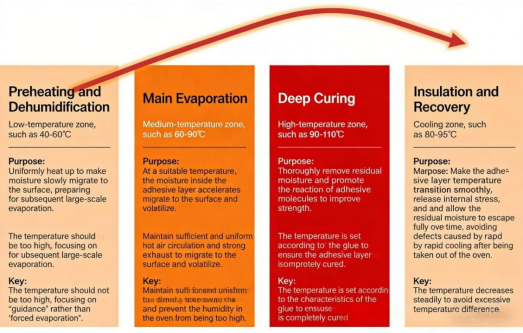
Water is the carrier of water-based adhesives and must be precisely managed during drying. A well-designed oven temperature profile ensures complete drying.A four-stage oven temperature profile is recommended, illustrated using typical parameters for F0955 adhesive:
Step 4: Gradual Lamination
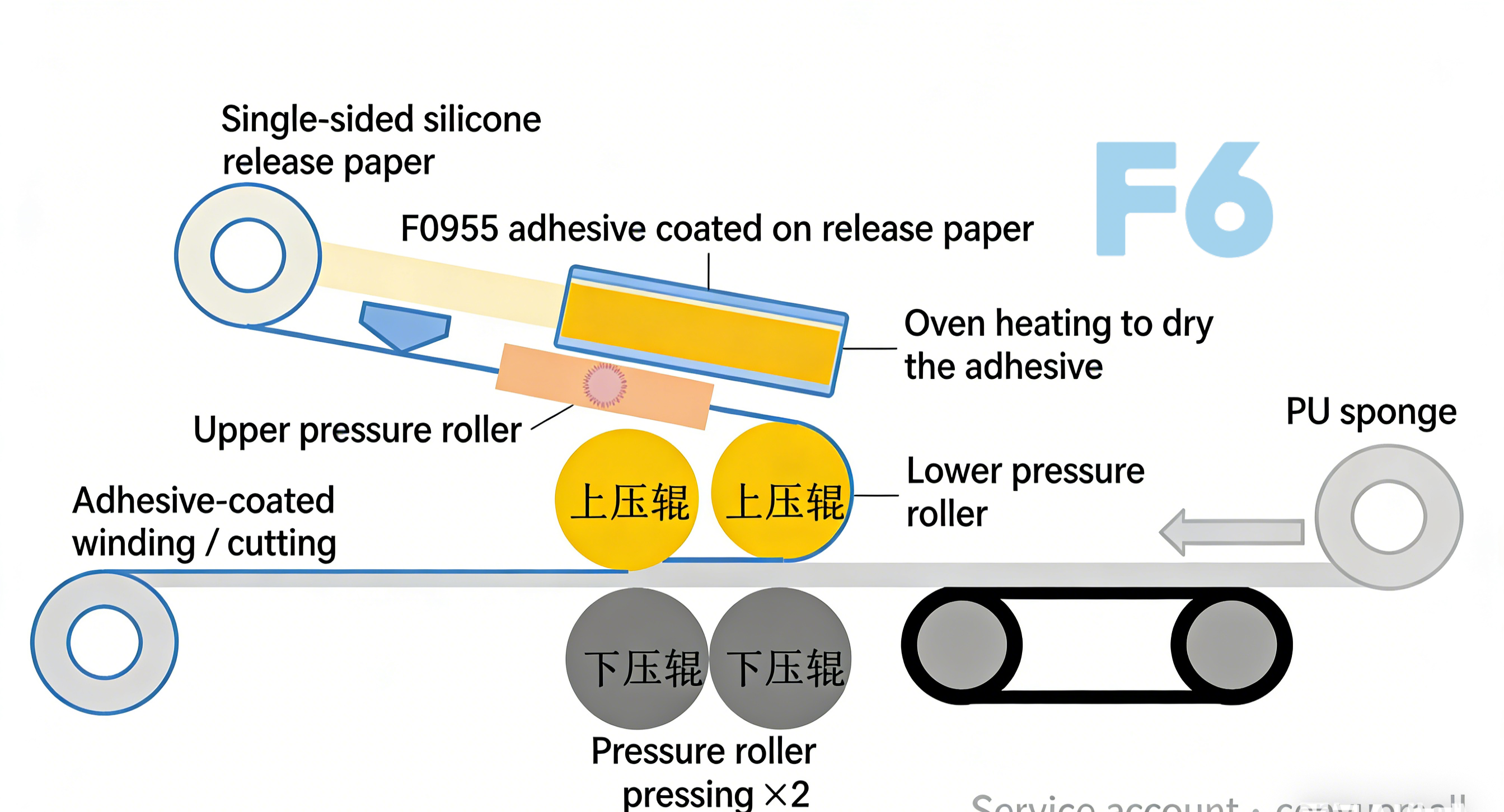
Compounding pressure is the final critical process to eliminate interfacial gas and achieve intimate bonding. Adopting a two-stage roller design is an effective way to optimize lamination results.
First Set of Rollers: Pre-lamination Rollers
Apply light pressure to initially bond the adhesive layer with the PU foam.Control the pressure based on the initial height of the foam during the pre-compression stage.
Second Set of Rollers: Main Compaction Rollers
On the basis of pre-lamination, uniformly increase the pressure to achieve the final tight lamination.Define the pressure using the foam compression rate as the core indicator, and calculate the height parameters corresponding to the actual pressure by combining the “original thickness” and “compression rate”.
Example Calculation:
If the initial thickness of the PU foam is 10 mm and the target compression rate is 10%, the gap height for the first set of pre-lamination rollers should be set to 10 mm.Compression amount = 10 mm × 10% = 1 mm → Therefore, the gap height for the second set of main compaction rollers must be set to 9 mm (correction note: 10mm – 1mm = 9mm, to match the 10% compression rate).
Conclusion
Through the collaborative control of these four aspects—from precise adhesive selection and interface treatment, to scientific moisture management (oven temperature profile), and finally to rational lamination pressure design—we can systematically resolve various issues in the lamination of water-based pressure-sensitive adhesives and PU foam, ultimately achieving high-quality and stable production.
三、Quality Control
1. Post-Lamination Quality Inspection
After the foam is coated with adhesive, it must be allowed to stand for at least 24 hours (72 hours recommended) before use.In addition, quality shall be controlled through immediate inspection + long-term monitoring to ensure the product meets application requirements.
Immediate Inspection
Face-to-Face Bond Test
Gently press the adhesive-backed foam against itself, pull with moderate force, and observe the separation.If the adhesive layer remains uniformly attached to the foam surface without obvious peeling or delamination, the adhesion meets the standard.
Visual and Tactile Inspection
Check the material surface for bubbles, blisters, or partial debonding.Touch the adhesive layer to confirm normal tack and flat surface, preventing post-cure tack caused by incomplete drying.
Retained Sample Testing
Room-Temperature Stability Test
Take samples from each batch, apply the adhesive-backed foam to the target substrate (e.g., automotive interior parts, furniture panels), and leave it at room temperature for several days.Record any problems such as falling off or edge lifting.
Scenario-Based Environmental Test
If the product is used in high-temperature and high-humidity environments, additional temperature and humidity simulation tests are required (e.g., storage at 85℃ / 85% RH for 24 hours) to verify bonding stability between the adhesive-backed foam and the substrate, ensuring no failure during long-term use.
2. Production Process Control
From adhesive storage to equipment maintenance, refined management of every step is the key to stable production.
Adhesive Storage
The adhesive shall be stored in an environment between 0–40 °C and used within 6 months if possible.
After opening, seal the container promptly to prevent skinning on the surface, which may affect coating uniformity and adhesion.
Production Environment
Stable temperature and humidity ensure a consistent drying rate and reduce lamination deviation caused by moisture absorption and deformation of the foam.
Adjust the workshop environment dynamically according to seasons:
Summer: Ensure ventilation and dehumidification (to avoid foam absorbing moisture and increasing lamination difficulty).
Winter: Raise the temperature appropriately (to prevent low temperature from reducing adhesive activity).
Equipment Maintenance
Clean the coating roller daily to remove residual adhesive, avoiding clogging or uneven coating.
Inspect the oven ventilation system regularly to ensure smooth hot-air circulation and prevent incomplete drying due to poor exhaust.
Calibrate the roller pressure sensors monthly to avoid inconsistent lamination tightness caused by pressure deviation.
Report equipment malfunctions immediately to prevent minor issues from developing into major failures.
Through strict composite quality control via immediate inspection + retained sample tracking, combined with full-process management of adhesive storage, environment control, and equipment maintenance, the defect rate can be effectively reduced. This ensures that PU foam laminated products perform stably in various applications, delivering reliable and durable finished products to customers.
Conclusion
High-quality PU foam lamination relies on four key steps:
Choose the right adhesive (select an adhesive suitable for PU foam, e.g., F0955)
Prepare the foam (proper cleaning + surface activation)
Optimize the oven (adjust temperature and airspeed, using a 4-stage drying process)
Control lamination pressure (use two sets of rollers: light pre-lamination followed by high-pressure compaction to remove bubbles)
During production, continuous adjustment is required:
Monitor ambient temperature and humidity
Check adhesive viscosity
Perform regular equipment inspections
Pay attention to every detail
Through the PDCA cycle (Plan-Do-Check-Act) to continuously optimize parameters,we can achieve products that bond firmly, do not deform, and perform reliably.
Water-based acrylic pressure-sensitive adhesives (hereinafter referred to as water-based PSAs) are now widely used in automotive interior applications such as NVH backing for HVAC assemblies, steering wheel HOD (Hands-Off Detection) backing, vanity mirror bonding, and seat comfort foam lamination. These applications directly affect driving experience and structural stability, making the adhesive a critical material for automotive interior performance.
Compared with traditional solvent-based adhesives, water-based PSAs have become the preferred choice for automotive interiors for two key reasons:
First, they meet the automotive industry’s stringent requirements for low odor and low VOC (volatile organic compounds), aligning with increasingly strict environmental standards.
Second, they are capable of withstanding the extreme conditions encountered during real vehicle use.
Automotive environments are highly variable: interior temperatures can exceed 60 °C under summer sun exposure, drop below –20 °C in winter, and experience significantly increased humidity during rainy conditions. However, water-based PSAs are inherently sensitive to moisture. Under high-humidity conditions, the adhesive film can absorb moisture from the air; once moisture absorption and hydrolysis occur, adhesion performance may deteriorate, potentially leading to interior component detachment.
Therefore, for a water-based PSA to be truly suitable for automotive interiors, “being able to stick” is far from enough. It must pass a series of targeted validation tests.
1. How Does a Water-Based Acrylic PSA “Stick” to Automotive Interiors?
The defining feature of pressure-sensitive adhesives is that they are tacky at room temperature and can form a strong bond with light pressure. Water-based acrylic PSAs follow this same principle, but their performance relies more heavily on molecular structure and interaction with substrates.
From a technical standpoint, adhesion mainly depends on three key mechanisms:
Van der Waals forces: Acrylic polymer chains in the adhesive interact with molecules on the surface of interior substrates such as plastics, fabrics, and foams, generating intermolecular attraction.
Wetting behavior: After coating, the water-based adhesive forms a uniform film that wets and penetrates microscopic pores on the substrate surface, creating a “mechanical interlocking” effect.
Cohesive strength: The internal strength of the adhesive film ensures that the adhesive does not fail internally after bonding, allowing stable transmission of adhesion forces.
In simple terms, a high-performance water-based acrylic PSA must strike a delicate balance between adhesion (tack), cohesion (internal strength), and wettability (substrate compatibility). Variations in temperature and humidity inside a vehicle can easily disrupt this balance—making environmental testing essential.
2. Why Temperature and Humidity Are the Biggest Challenges
High humidity, especially during rainy conditions, poses the most direct challenge to water-based PSAs. Because the adhesive film contains hydrophilic functional groups, it can absorb moisture from the air under humid conditions, triggering moisture absorption and hydrolysis. This process damages the adhesive structure in two major ways:
Moisture intrusion reduces interfacial adhesion, effectively creating a “water layer” between the adhesive and the substrate, leading to a sharp drop in bond strength.
Hydrolysis breaks polymer chain linkages within the adhesive, reducing cohesive strength and making the film brittle, potentially causing cracking or powdering.
Once these failures occur, interior components may loosen or detach—for example, foam backing in HVAC assemblies may fall off and rattle, or steering wheel HOD sensitivity may be compromised—directly affecting driving comfort and safety.
Temperature extremes further exacerbate these issues. At high temperatures, increased molecular mobility lowers adhesive modulus: wetting may improve, but cohesive strength decreases. At low temperatures, molecular motion is restricted, modulus increases sharply, wetting becomes insufficient, and adhesion drops. High temperatures also accelerate moisture penetration and degradation, causing faster adhesive failure.
As a result, testing for automotive interior water-based PSAs must focus on high-temperature/high-humidity exposure and temperature cycling.
3. Two Core Tests to Verify Extreme Environmental Resistance
To realistically simulate harsh automotive conditions, two key temperature- and humidity-related tests are commonly used: the 85/85 test and thermal cycling (hot–cold cycling) test. Both focus on monitoring changes in peel strength under extreme conditions to confirm long-term bonding stability.
3.1 85/85 Test
The 85/85 test involves bonding adhesive-coated samples to typical automotive substrates (such as PP, ABS, or textiles) and placing them in an environment of 85 °C and 85% relative humidity for an extended period (duration defined by product requirements).
This test simulates scenarios such as long-term driving or outdoor parking in hot, rainy regions, where the vehicle interior remains in sustained high-temperature and high-humidity conditions. Peel strength is measured at various time intervals. If the reduction in peel strength is minimal and no debonding or adhesive residue issues occur, the adhesive demonstrates strong resistance to hygrothermal aging.
3.2 Thermal Cycling Test
While the 85/85 test focuses on sustained heat and humidity, the thermal cycling test simulates dramatic temperature fluctuations across regions and seasons. Typical conditions range from –40 °C (severe winter) to 100 °C (summer sun exposure), with repeated cycles consisting of low-temperature dwell, heating, high-temperature dwell, and cooling phases.
Under such “thermal shock” conditions, both adhesive and substrate expand and contract at different rates. If the adhesive lacks sufficient flexibility or cohesive strength, cracking or delamination is likely. This test evaluates dimensional stability and long-term adhesion durability. Only adhesives that remain firmly bonded without edge lifting or failure after multiple cycles are considered suitable for all-climate, all-region vehicle use.
4. Conclusion: Only Tested Performance Qualifies for Automotive Interiors
From an adhesion mechanism perspective, water-based PSAs rely on a balance between molecular attraction, wetting, and cohesive strength. Extreme automotive conditions—high temperature, high humidity, and temperature fluctuations—directly challenge this balance.
The 85/85 test and thermal cycling test precisely evaluate an adhesive’s resistance to moisture-heat aging and temperature variability by replicating the harshest real-world environments. A water-based acrylic pressure-sensitive adhesive that performs consistently in both tests—maintaining required peel strength without debonding—does more than meet environmental regulations. It provides critical assurance of interior component stability and delivers a safer, more comfortable driving experience.
In our traditional concept, we always think “Thicker tape means stronger adhesion?” Is this really the truth? NO.
Actually, adhesion mainly depends on the adhesive’s formulation(adhesive type, adhesive solids content), the compatibility of the substrate and the adhered object, and coating uniformity. Tape thickness is determined by cushioning or gap-filling needs.Thick tapes aren’t necessarily stronger, and thin tapes can still provide reliable bonding with high-quality adhesives.
Thickness has no direct relationship with Adhesion:
Thickness mainly depends on the carrier and adhesive layer.
Thick double-sided tapes (e.g., foam tapes) generally offer strong gap-filling properties, compensating for uneven surfaces.
Thin double-sided tapes (e.g., PET, nonwoven carriers) are better suited for flat, smooth surfaces, ensuring better aesthetics and fit.
Adhesion mainly determined by adhesive formulation.
Regardless of thickness, the true bonding performance is decided by the pressure-sensitive adhesive itself, such as acrylic, rubber, or silicone systems.
Tapes of the same thickness but different adhesives may vary significantly in initial tack, holding power, temperature resistance, and aging resistance.
Summary:
1.Thickness ≠ Adhesion.
2.Thick tapes are generally more suitable for rough and irregular surfaces.
3.Thin tapes are more suitable for smooth and precision bonding.
4.Adhesion strength should be judged by the adhesive system and performance parameters.
Application Comparison by Tape Thickness:
Thickness Range
Typical Carrier
Characteristics
Typical Applications
Ultra-thin (≤0.1mm)
PET, carrier-free
Excellent appearance, high transparency, minimal space, ideal for precision bonding
Thin ≠ Weak Adhesion → Thin tapes can achieve strong bonding but require smooth surfaces.
Thick ≠ Stronger Adhesion → The key advantage of thick tapes lies in gap filling and impact resistance, not simply stronger adhesive force.
Final bonding performance depends on:Adhesive System + Thickness + Substrate Characteristics.
Characteristics of Foam Materials:
Surface roughness and porosity;
Relatively low surface energy (e.g., PE/EVA foams are difficult to bond with general adhesives);
Softness and elasticity, prone to shifting during lamination and service.
Advantages of F6 Double-Sided Tape:
Acrylic PSA:excellent aging resistance, temperature resistance, and holding power.
High initial tack + long-term adhesion, maintaining reliable bonding even on rough or low surface energy materials.
Multiple thickness options (commonly tissue, PET, or nonwoven carriers) to balance fit and cushioning.
F6 double-sided tapes use Acrylic Pressure-Sensitive Adhesive, offering excellent aging, temperature, and weather resistance, making them suitable for long-term applications in automotive, electronics, and outdoor use. While their cost and quality may be less obvious in general bonding, their advantages shine in specialized foam bonding (PU, PE, EPDM, etc.), providing precise substrate compatibility, strong stability, weather resistance, conformability, and superior cost-effectiveness.”
Typical Applications:
Automotive: bonding of foams (PU, PE, EVA) with plastics/metal parts.
Appliances::attachment of cushioning strips and sealing foams.
Electronics:foam pads, shock-absorbing foams combined with housings.
In summary, we must clearly know that “Thickness ≠ Adhesion” and learn to judge bonding performance based on the characteristics of the surface being bonded and the adhesive system (such as Acrylic PSA). F6 Double-Sided Tape delivers strong weather and temperature resistance, excels in bonding rough or low-energy surfaces, and offers high tack with customizable thickness. Its balance of performance and cost makes it ideal for automotive, appliance, electronics, and construction applications.
Thank you for choosing our water-based PSA product.
This adhesive is an acrylic emulsion, non-hazardous, with low VOC content. It is more environmentally friendly and safer for operators’ health, while maintaining bonding strength and heat/humidity resistance comparable to traditional solvent-based PSAs.
On Odor
Low VOC does not necessarily mean low odor.
Even water-based PSAs have a certain level of odor. Perception of odor varies among individuals due to differences in olfactory sensitivity. For customers with low-odor requirements, please ensure good workshop ventilation after coating, and avoid storing PSAs together with other solvent-based or odorous materials in the same space.
On Solid Content & Viscosity
Our water-based PSAs are generally supplied in high-solid form (≥50% solids) to suit coating lines of various lengths and heating conditions. This helps reduce energy consumption, lower water content, and shorten drying time.
Typical RT viscosity: 10,000 – 25,000 mPa·s
Suitable for:
Oven length: 16 – 30 m
Wet coating weight: 80 – 200 g/m²
Line speed: 3 – 20 m/min
If your oven length, coating weight, or line speed exceeds these ranges, please inform us so we can adjust the viscosity to ensure coating compatibility.
Key Coating Considerations
Five critical coating variables: temperature profile, coating speed, air in/out volume, lamination pressure, curing time.
These must be adjusted based on oven length, heating power, coating weight, substrate type, and adhesive performance requirements.
If you are using our PSA for the first time, please inform us of your equipment specifications (length, heating method) so we can recommend optimal coating parameters.
Drying principle: Water-based PSAs dry by water evaporation.
Air volume balance is often overlooked. Insufficient dehumidification may lead to high moisture concentration inside the oven, causing condensation or poor drying efficiency.
Dry adhesive lamination:
Prefer two-step lamination:
Step 1: Pre-lamination (light pressure to exhaust air and smooth surface)
Step 2: Final lamination (higher pressure to enhance penetration and adhesion)
One-step lamination may cause material deformation or thickness reduction, leading to shrinkage after die-cutting.
Glue pan handling:
Keep liquid level 1 cm below the baffle to avoid roller–baffle friction that generates heat and dried gel particles, which may block the doctor blade and cause line defects.
Periodically spray ~75% ethanol at the baffle edges to reduce bubbles and dried particles.
Curing time:
Adhesive strength improves with curing.
24 hours: good adhesion
72 hours: stable adhesion
For low-density foams without release liners, avoid multi-layer die-cutting, as adhesive penetration may cause “loss of tack.”
Release liner precautions:
Paper liners with single-side PE/silicone coatings may warp under high humidity, causing delamination. Ensure proper dehumidification.
Under very dry conditions, ensure re-moisturizing to prevent liner curling or strong static buildup.
Adhesive Storage
Store at 0–40℃.
Use within 6 months for best performance.
After opening, seal tightly to prevent surface skinning.
If additives are introduced or the adhesive is altered without our consent, we will not be responsible for quality issues.
Manual Application Notes
Temperature control:
Ensure workshop temperature is above 10℃.
Substrate temperature must not be below 9℃.
Surface preparation:
Metal parts: free from oil, condensation, or coolant.
Plastic parts: free from mold-release agents.
Manual bonding:
Apply a lamination pressure of at least 100 gf/cm².
Cold press dwell time: ≥1 second (longer is better).
PET double-sided tape is made with PET film as the base material. It has high bonding strength, good stability, as well as temperature resistance (usually -40℃~120℃), aging resistance and corrosion resistance. It can replace screws and other mechanical fasteners, used in electronics, automotive and home appliance fields to fix screen components, interior parts and circuit boards. It can also attach advertising letters and decorative panels to ensure a flat surface.Below is an introduction to our company’s PET D/S Adhesive Tape series:
(一)Basic Characteristic:
Product Type
F708
F709
F710
F708-20
FR708-20
F7013
Image
Carrier
Polyester
Black Polyester
Polyester
Polyester
Polyester
Polyester
Type of Adhseive
Solvent Pressure Sensitive Adhesive
Solvent & Rubber
Total Thickness
0.125mm
0.125mm
0.1mm
0.2mm
0.2mm
0.125mm
180°Peel Adhesion
25N/25mm
26N/25mm
17N/25mm
28N/25mm
29N/25mm
18N/25mm
Loop Tack
22#
22#
18#
30#
30#
18#
Temperature Resistance Range
-10℃-100℃
-10℃-100℃
-10℃-100℃
-10℃-120℃
-10℃-100℃
0℃-60℃
(二)Application Area:
Product Type
Application
F708
Wide application range and general-purpose. Used for automotive interior parts, plastic components of home appliances, nameplates and labels on industrial equipment (especially suitable for bonding hard-to-stick plastic housings such as PP, PE, and ABS).
F709
On the basis of the bonding performance of 708, it additionally provides light-shielding, anti-transmission, and black aesthetic appearance functions.
F710
Offers the same bonding performance as 708 but is more suitable for lightweight and precision applications.
F708-20
With greater thickness, it is ideal for rough surfaces, gap filling, and structural fixation (automotive, home appliances, industrial components).
FR708-20
Widely used in automotive, home appliances, industrial, and advertising/printing industries, where high long-term reliability is required.
F7013
One side provides permanent adhesion suitable for long-term fixing, while the other side is removable, designed for temporary fixation or repositionable applications. Typical uses include electronic displays, protective films, automotive assembly, advertising mounting, and tooling/fixtures.
(三)Advantages Over Brand Tapes:
Product Type
F708
F709
F710
F708-20
FR708-20
F7013
Replaced Model
3M 9475LE
3M 9475LEB
3M 93010LE
3M 93020LE
Tesa 4965
Nitto-NO.535A
1、Narrowing Performance Gap
Our Products are coated with in-house developed acrylic pressure-sensitive adhesive, which provides excellent bonding strength to most materials. The performance meets the majority of requirements in automotive, electrical, and household appliance assembly. Under normal application scenarios, the performance gap compared to branded tapes has become minimal.
2、Cost Advantage
As an alternative to branded double-sided tapes, our products deliver comparable performance at only a fraction of the price. This significantly reduces costs for both enterprises and end-users, offering a clear cost-performance advantage.
3、Low Minimum Order Quantity (MOQ)
Many branded tapes only accept large-volume orders with little to no support for small-batch customization. In contrast, our tapes are available with a lower MOQ, allowing customers to avoid excessive procurement, unnecessary capital lock-up, and inventory build-up.
4、Lead Time & Flexibility
Branded tapes often involve long lead times, with some models even requiring overseas sourcing. Our products offer much shorter delivery cycles, with the ability to provide quick sampling, customized thickness, and slitting dimensions.
5、Environmental Compliance
Our PET double-sided tapes comply with environmental and safety standards, certified by SGS, ISO, and RoHS. They are halogen-free and fully RoHS-compliant, meeting the environmental requirements of both domestic and international customers.
(四)Conclusion:
If you are currently using brand tape, you can try our product . Especially for manufacturers of PET double-sided adhesive tape for large-scale applications, such as home appliance assembly and automotive interior, the cost difference is very significant. If you are interested in our products, you can contact us on the consultation page. We can provide you with samples!