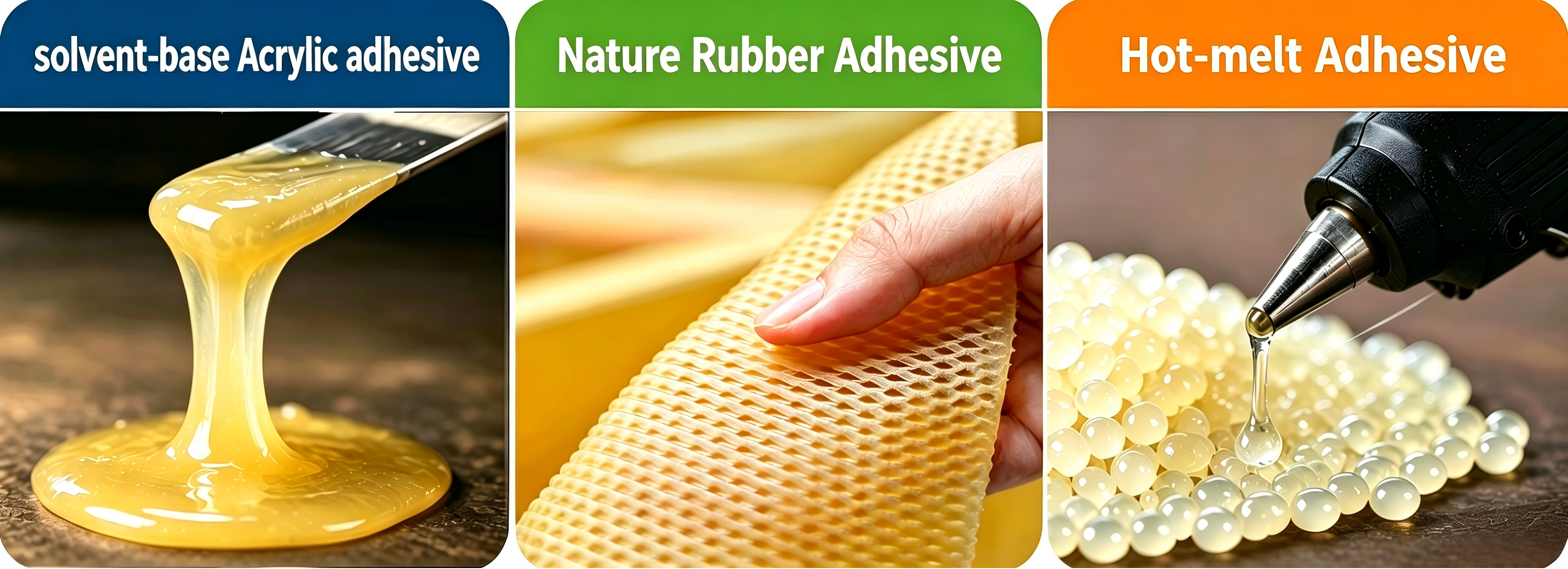
Solvent-based Acrylic, Nature rubber and hot-melt adhesives are widely used across industrial bonding applications. A common misconception in industrial bonding is that adhesive systems can be ranked simply by “strength” to determine a universal best option.
In reality, no single adhesive fits every application. Material selection should be based on substrate type, load condition, operating temperature, environmental exposure and production process.
Fundamentally, successful adhesive selection is about matching material properties to actual application requirements.
1. Solvent-based Acrylic Adhesives
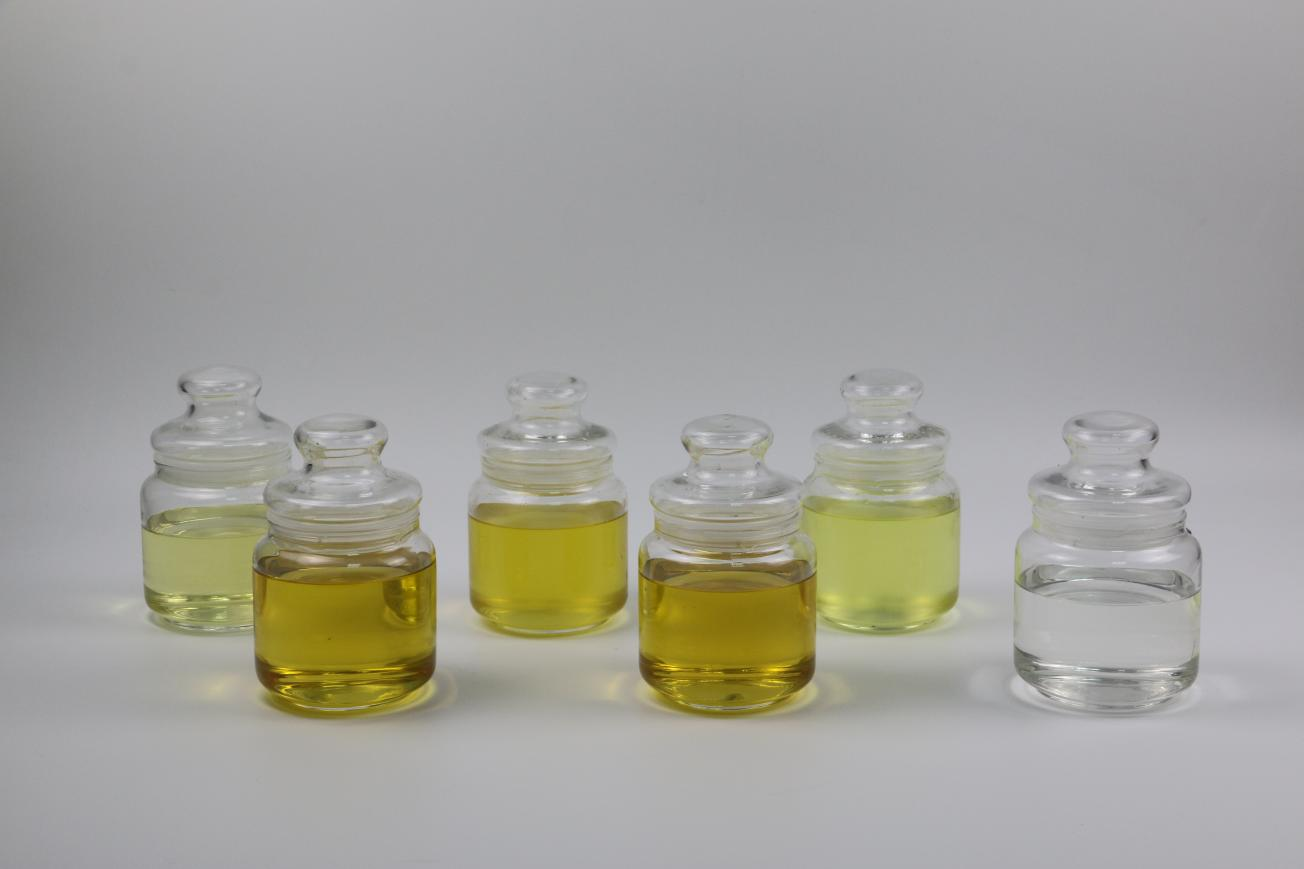
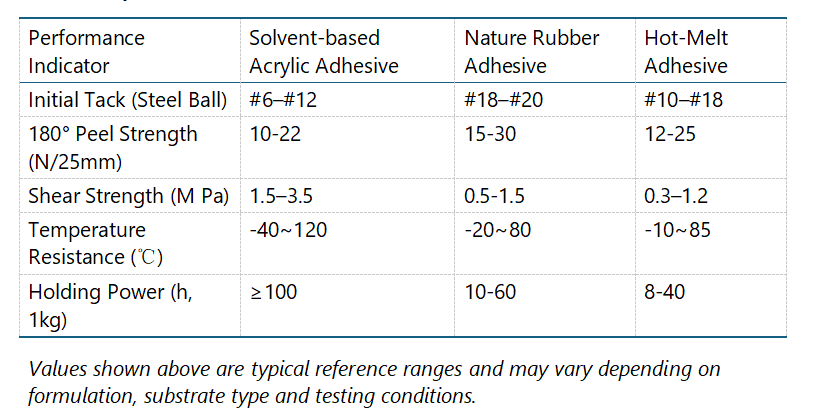
Solvent-based acrylic adhesives are designed for long-term durability, heat resistance, and environmental stability rather than extremely high initial tack. They provide excellent UV resistance, strong holding power, and reliable long-term adhesion performance, making them well suited for demanding and long-life applications such as automotive trim bonding, appliance assembly, outdoor mounting, and permanent foam lamination.
2. Nature Rubber Adhesives
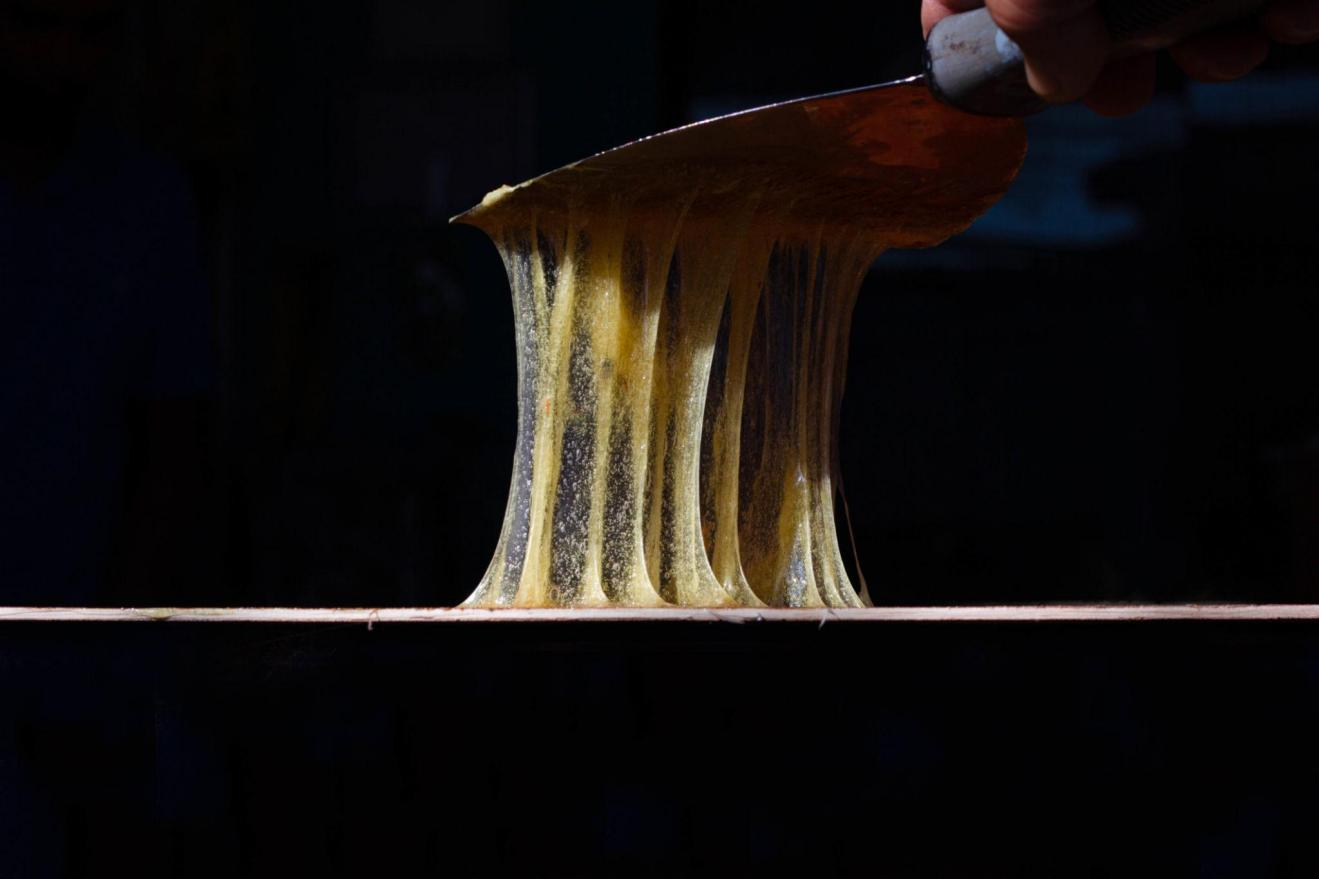
Natural rubber adhesives have strong initial tack and excellent peel strength on both polar and non-polar surfaces. They bond quickly even with short contact time, and provide good flexibility and easy, clean removal without residue, making them suitable for temporary fixing and indoor applications. However, they have limited heat resistance (usually above 70°C), and relatively weak resistance to aging, UV, humidity, and chemicals compared with acrylic systems, resulting in lower long-term stability.
3. Hot-Melt Adhesives
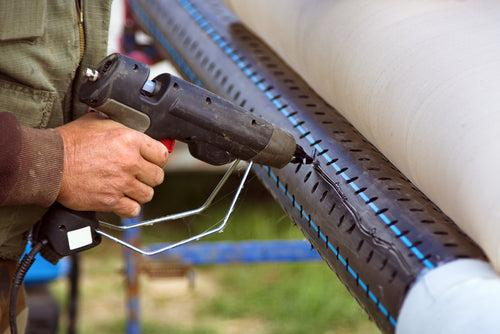
Hot-melt adhesives are used for high-speed production, providing fast bonding through a melt-and-cooling process with immediate handling strength. Some systems are also referred to as synthetic rubber-type hot melts due to their rubber-like elasticity and cost efficiency. They offer high initial tack and good peel adhesion on a wide range of substrates and are widely used in packaging, labeling, hygiene products, and light-duty assembly.
Compared with acrylic systems, they provide faster processing and lower cost, but lower heat and aging resistance, weaker environmental resistance, and may leave residue after removal.
4. Performance Comparison
5. Final Thoughts
Acrylic, rubber and hot-melt adhesives should not be viewed as competing materials, but as complementary solutions designed for different industrial challenges.
- Solvent-based Acrylic adhesives provide long-term durability and environmental stability
- Nature Rubber adhesives deliver aggressive tack and excellent surface adaptability
- Hot-melt adhesives maximize manufacturing efficiency and processing speed
Most bonding failures are not caused by poor adhesive quality, but by selecting an adhesive system that does not match the actual working conditions.
In industrial bonding, selecting the right adhesive is often more important than selecting the strongest adhesive.